What Is a Football Development Centre?
How a football development centre differs from a club or an academy, who it suits, whether your child can do both, and what to check before you join.

Short answer: a football development centre is a coaching programme for children. It focuses on teaching skills rather than winning league matches. Children train in groups by age, usually once or twice a week, and there are no Saturday fixtures or league tables. Some are run by professional clubs, some by independent coaches. Many children go to a development centre and play for a grassroots club as well. This guide explains how development centres work, how they differ from clubs and academies, and what to check before you join one.
What does a football development centre do?
Its job is to make children better footballers. A grassroots club exists to field a team on Saturday. A professional academy exists to produce players for the first team. A development centre sits between the two: the session itself is the product.
In practice, that usually means:
- Coaching, not fixtures. Sessions are built around a skill or idea, such as receiving on the half-turn, 1v1 defending or playing out from the back. The session isn't there to prepare a team for a particular opponent.
- Groups by age. Children train with others of a similar age, and sometimes ability, so the work fits where they are.
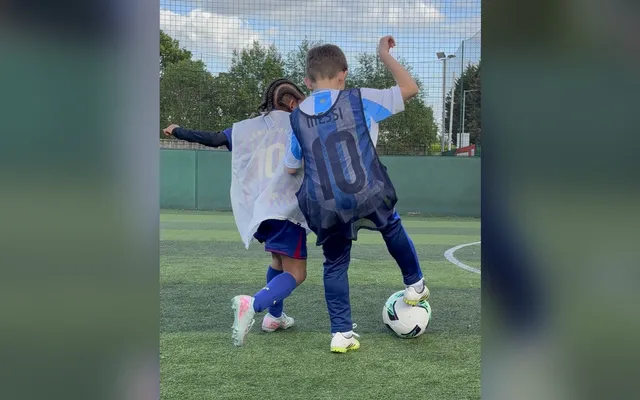
- Lots of small-sided games. 3v3, 4v4 and 5v5 games give every child far more touches than a full-size match.
- Everyone plays. There is no team sheet, so there is no bench. A child who isn't a regular starter for their club gets the same amount of football as everyone else.
- A plan across the year. Good centres follow a curriculum, so each block of sessions builds on the last.
How is a development centre different from a club or an academy?
The three are easy to mix up, especially when they share pitches and kit suppliers. Here's how they usually compare:
Grassroots clubDevelopment centreProfessional academy
Main aim | Play matches in a local league | Improve each child's skills | Produce players for the professional game
Who can join | Usually anyone, if the team has space | Anyone in the age range | By invitation, after scouting or trials
Matches | Weekly league fixtures | Games inside sessions, no league | Fixtures against other academies
Commitment | Training plus match day | One or two sessions a week | Several sessions a week, plus travel
Cost | Annual subs, often lower | Monthly or per session | Usually free to the family
Academies can formally register players from Under 9s. Below that age, and alongside the academy system, many professional clubs run their own development centres through their community trusts. Our article on academy vs club football goes into more detail on the academy side.
What kinds of development centres are there?
Professional club development centres
Many professional clubs, through their community trusts or foundations, run development centres in their area. Children usually pay to take part, and sessions follow the club's coaching style. Some clubs also use them to spot talented players, though most children who attend never join an academy, and that isn't the point of going.
Independent development centres
These are run by qualified coaches who aren't attached to a professional club. Konevych FDC is one. The best of them offer the same kind of structured coaching, often in smaller groups and closer to home. Because there's no club badge on the shirt, it's worth checking the coaches' qualifications and experience before you join. We cover how to do that below.
Girls' Emerging Talent Centres
For girls, England Football runs a network of Emerging Talent Centres, linked to the women's professional game, for players aged 8 to 16. They're a talent programme rather than an open coaching session. Players are usually selected and keep playing for their grassroots team at the same time. If your daughter is keen and progressing, ask her club coach or your county FA how selection works locally.
Can my child go to a development centre and play for a club?
Yes, and many do. A typical week might be one development centre session, one club training night and a match at the weekend. The two complement each other. At the club, your child learns to play in a team, handle a result and turn up for their teammates. At the development centre, they get the extra touches and focused coaching that are hard to fit into a club session run by a volunteer with 14 players and one bag of balls.
The only thing to watch is the total load. A child doing three or four football sessions a week, plus PE and break-time games, needs rest days. If they seem tired, sore or flat, cut back for a week or two.
Will a development centre get my child into an academy?
Be wary of anyone who promises that. Academies recruit very few players from each age group, and selection depends on many things nobody can control, including when a child grows. What a good development centre can do is make your child a better, more confident player. That gives them the best chance of whatever comes next, whether that's a higher team at their club, a school team, a trial or simply enjoying football into their teens.
If you think your child might have something special, our article on signs your child has real football potential explains what coaches look for beyond goals.
Who is a development centre right for?
A development centre suits a wide range of children, including:
- Beginners who want to learn the basics before joining a team. Our guide for parents whose child is new to football covers the first month in detail.
- Club players who want more. A child who gets 20 minutes a game, or whose club trains once a week, can double their time on the ball.
- Children who don't enjoy the pressure of matches but still love the game.
- Late starters aged 11 to 14 who need to catch up on technique. See Is my child too late to start football?
- Families with busy weekends, who can't commit to a Saturday or Sunday fixture every week.
It suits less well a child who mainly wants to play competitive matches with the same group of friends every week. For that, a grassroots club is the right first step, and a development centre can come later as extra coaching.
What does a good development centre session look like?
Turn up to a trial session and watch for these things:
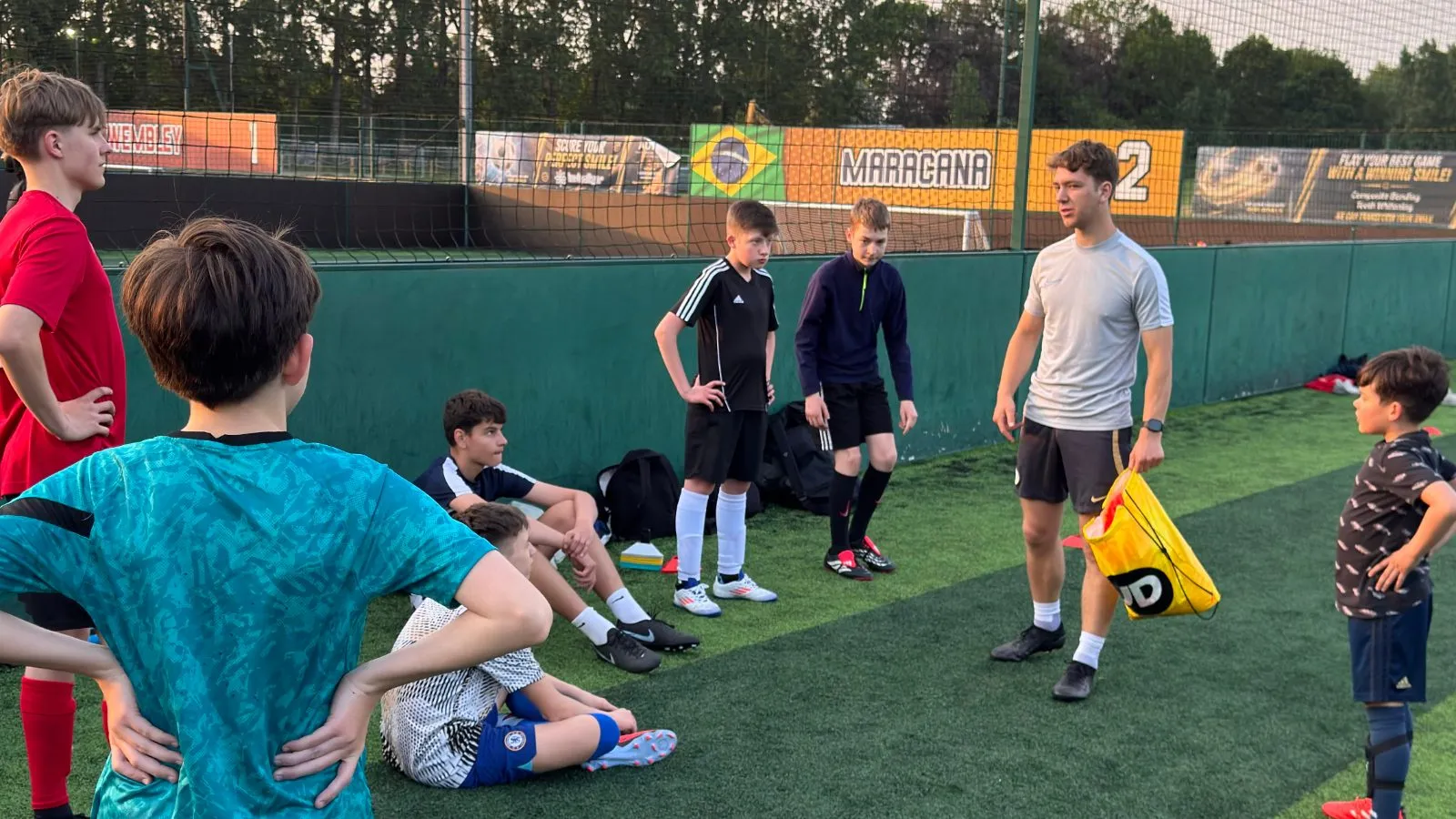
- The ball is moving most of the time. Long queues, laps of the pitch and lectures are bad signs.
- The coach talks to individual children, not just the whole group, and uses their names.
- There's a clear theme. If you ask the coach what the session is about, they can tell you in one sentence.
- Mistakes are treated as part of learning. Children try things, get them wrong and try again without being shouted at.
- The session ends with a game, and the children leave wanting more.
Our article on what good football training looks like breaks down a typical 60-minute session at each age.
How will I know my child is improving?
Progress in football is slow and uneven, so judge it over a term, not a week. After two or three months at a good development centre, you should notice some of these:
- Better first touch. The ball stops closer to their feet, so they have more time for the next move.
- Head up more often. They look around before the ball arrives instead of after.
- Using both feet. Not perfectly, but they no longer turn their whole body to use their favourite foot.
- More confidence in 1v1s. They try to beat a player instead of passing straight away.
- They can explain what they're working on. If your child comes home and says "we did receiving on the back foot", the coaching is getting through.
Ask the coaches for feedback, too. A good centre will happily tell you what your child does well and what they're working on next.
What should I check before I join?
There's no official licence for the name. Anyone can call their sessions a "development centre", so the label alone tells you nothing. Ask:
- What qualifications do the coaches hold? Look for FA or UEFA coaching badges, and ask where the coaches have worked before.
- Are all coaches DBS-checked, and who is the safeguarding lead? A good centre will answer straight away and have a written policy.
- How many children does each coach work with? Smaller groups mean more attention for your child.
- How are groups organised? By age, ability or both, and can a child move up when ready?
- Is there a free or low-cost trial? You should be able to see a session before committing.
- How do you pay, and can you cancel? Monthly memberships, termly blocks and pay-as-you-go all exist. Check the notice period.
Our full checklist for choosing a safe football club covers safeguarding in more depth. For a sense of typical prices, see what kids' football training costs in London.
How does Konevych FDC work?
Konevych Football Development Centre is an independent development centre in south-west London. We run coaching sessions only, with no league teams, so every child plays and every session is built around learning. Children train in three age groups:
- Minis, ages 4–7: first touches, balance, coordination and simple games.
- Juniors, ages 8–12: passing, receiving, 1v1s and first ideas about positions.
- Teens, ages 13–17: technique under pressure, tactics and fitness.
Our head coaches hold UEFA C licences, studied at St Mary's University and have coached at a Chelsea FC Development Centre. Every coach is DBS-checked. Many of our players also play for local clubs, and we're happy to work around their fixtures.
See our venues for session days and times, or meet the team on our coaches page. Your child's first session is free: book a free trial and we'll place them in the right group from their date of birth.
Sources
All checked October 2026:
- Premier League: Youth Development Rules 2025/26 (Rules 135–147 on development centres, Rule 290 on Under 9 registration)
- England Football: FutureFit, youth match formats from 2026/27
Further reading: how to get into a football academy.
Want to put this into practice? We run weekly sessions for ages 4–17 at Goals Tolworth. Book a free trial.