My Child Is New to Football: Their First Month
New to football? Which sessions suit beginners, what kit to buy, what's normal in the first four weeks, and how to help your child at home and after training.

Short answer: a child who is new to football does best in a coached session with children their own age, where small-sided games give everyone plenty of time on the ball. They don't need to be good before they start, and they don't need expensive kit. Expect the first month to be about having fun, making a friend or two and learning the routine. Real skill comes later. This guide walks you through those first four weeks: what to buy, what's normal, and how to help.
Choosing the right first sessions
In short: a small group of children the same age, plenty of small games, and a coach who teaches as well as organises, so your child touches the ball dozens of times an hour. We cover the choice in more detail in which sessions suit a beginner best.
Does my child need to be good before they join?
No. Coaching sessions exist to teach children who can't play yet. Every good player you've ever seen was once a beginner who fell over the ball. What matters at the start is that your child wants to come, listens to the coach and has a go.
If your child is older, say 11, 12 or 13, and worried that everyone else has been playing for years, read Is my child too late to start football? Older beginners often catch up quickly because they already understand teamwork and practice.
What kit does a beginner need?
Less than you think. For the first month you need:
- Footwear for the surface. Most evening sessions run on 3G (artificial grass) pitches. Buy boots made for 3G or "AG", or astro trainers. Avoid metal studs; most 3G pitches don't allow them.
- Shin pads. Cheap ones are fine. They are compulsory in matches, so your child may as well get used to them now.
- Layers. A base layer, a top they can run in and a waterproof for the walk to the pitch. Gloves and a hat in winter.
- A water bottle with their name on it.
Don't spend a lot on boots yet. Children's feet grow fast, and a £25 pair that fits well beats a £90 pair bought a size too big "to grow into". Boots that are too big cause blisters and make the ball harder to control.
If you want a ball for home, get the right size. England Football's formats use a size 3 ball up to Under 11s, size 4 for Under 12s and 13s, and a full size 5 from Under 14s. A ball that's too big is heavy and hard to kick, which is no fun for a beginner.
What happens in the first month?
Every child is different, but most beginners follow a similar pattern.
Week 1: new faces and new rules
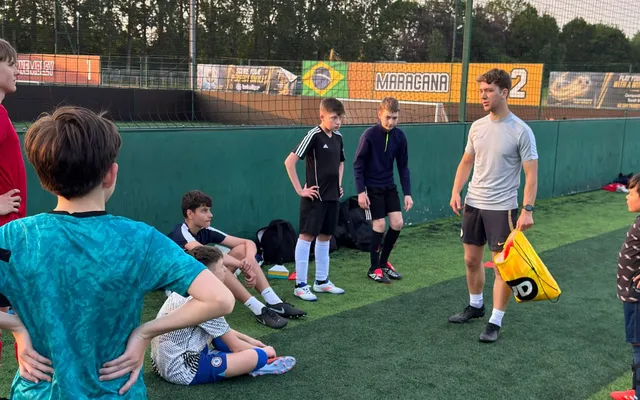
The first session is mostly about finding their feet. Your child is learning where to stand, what the coach's whistle means, what "bibs" are and the names of a couple of other children. Don't judge anything by week one. Some children run straight in; others watch from the edge for ten minutes. Both are normal. If this is also their free trial, our article on what to expect at a free football trial covers the session itself.
Week 2: the routine starts to stick
By the second session most children know the warm-up and recognise the games. They start to relax, and you'll often see more effort. This is also when some children wobble: the novelty has worn off and they realise others can do things they can't yet. A little frustration is a good sign. It means they care.
Weeks 3 and 4: first small wins
Now you may notice the small things. They stop the ball with the sole of their foot instead of chasing it. They look up before they pass. They shout for the ball. These moments are worth more than a goal, so notice them and tell your child you saw them.
What you shouldn't expect after a month: a strong weaker foot, skill moves, or a lot of goals. Those take a season or more of steady practice.
What if my child cries or doesn't want to go back?
It happens, and it's usually about something small and fixable. Ask calmly, later and away from the pitch, what the hardest part was. Common answers are:
- "I didn't know anyone." Arrive five minutes early so they can kick a ball with one other child before the session starts. Friendships form in those few minutes.
- "Everyone was better than me." Remind them that the others started somewhere too, and tell the coach. A good coach will pair them with a patient partner and give them a job they can succeed at.
- "I was cold" or "I was tired." Kit and timing problems. Extra layers and a snack an hour before training solve more tears than any pep talk.
Our advice is to commit to four sessions before deciding. One bad evening isn't a verdict on football. If your child still dreads going after a month, talk to the coach together. Our article on why children lose confidence in football covers the deeper warning signs.
How often should a beginner train?
Once a week is plenty for the first month. It gives your child something to look forward to without wearing them out or turning football into a chore. After a month or two, if they're asking for more, a second weekly session is the natural next step.
Coached sessions are only part of the picture. The UK Chief Medical Officers recommend that children and young people are active for an average of at least 60 minutes a day. Kicking a ball in the park, riding a bike and running around at break all count, and they all make training easier.
How can I help my child practise at home?
Short and fun beats long and serious. Ten minutes in the garden or park, two or three times a week, makes a real difference to a beginner. Some easy ideas:
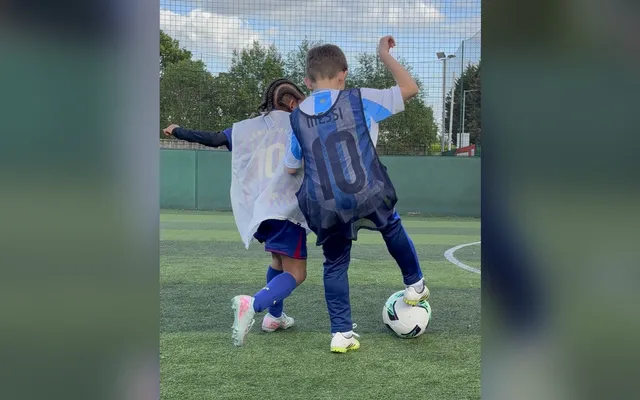
- Pass and stop. Pass the ball to each other, stopping it dead with the sole of the foot before passing back. Count how many you get in a row.
- Cone dribble. Line up a few shoes or water bottles and dribble in and out, keeping the ball close.
- Wall passes. Kick against a wall and control the rebound. Try left foot, then right.
Let your child win sometimes, keep score only if they want to, and stop while they're still enjoying it. For more ideas by age, try our garden football games, practice ideas for 4–7 year olds or games for 8–12 year olds.
What should I say after training?
The car ride home matters more than most parents realise. A tired child who gets a list of mistakes learns that football is a test. A tired child who hears "I loved watching you play" learns that football is theirs.
Questions that open children up:
- "What was the best game today?"
- "Did you learn anything new?"
- "Who did you play with?"
Leave the coaching to the coach. Shouting instructions from the side, even helpful ones, gives your child two voices to listen to and makes them anxious about getting it wrong in front of you.
When should my child start playing matches?
When they enjoy training and understand the basics: kick-offs, throw-ins, staying on their side of the game. For many beginners that's after a few months of coaching. There's no rush. Under England Football's rules, children can't play matches before they turn 6, and the youngest age groups play small-sided formats such as 3v3 and 5v5 where every child gets on the ball.
Not sure which age group your child would join? Our guide to football age groups for 2026/27 has a birth-date table and the match format for each group. And if you're comparing teams, our checklist for choosing a safe football club covers DBS checks, safeguarding and coach qualifications.
How do I know it's working?
Forget goals and trophies for now. After a month, these are the signs that football is going well:
- Your child asks when the next session is.
- They mention another child or the coach by name.
- They try something from training at home without being asked.
- They recover faster when they make a mistake.
- They're tired after training, but happy tired.
If you see two or three of those, your child is on the right path. Skill follows enjoyment, not the other way round.
How do our sessions work for beginners?
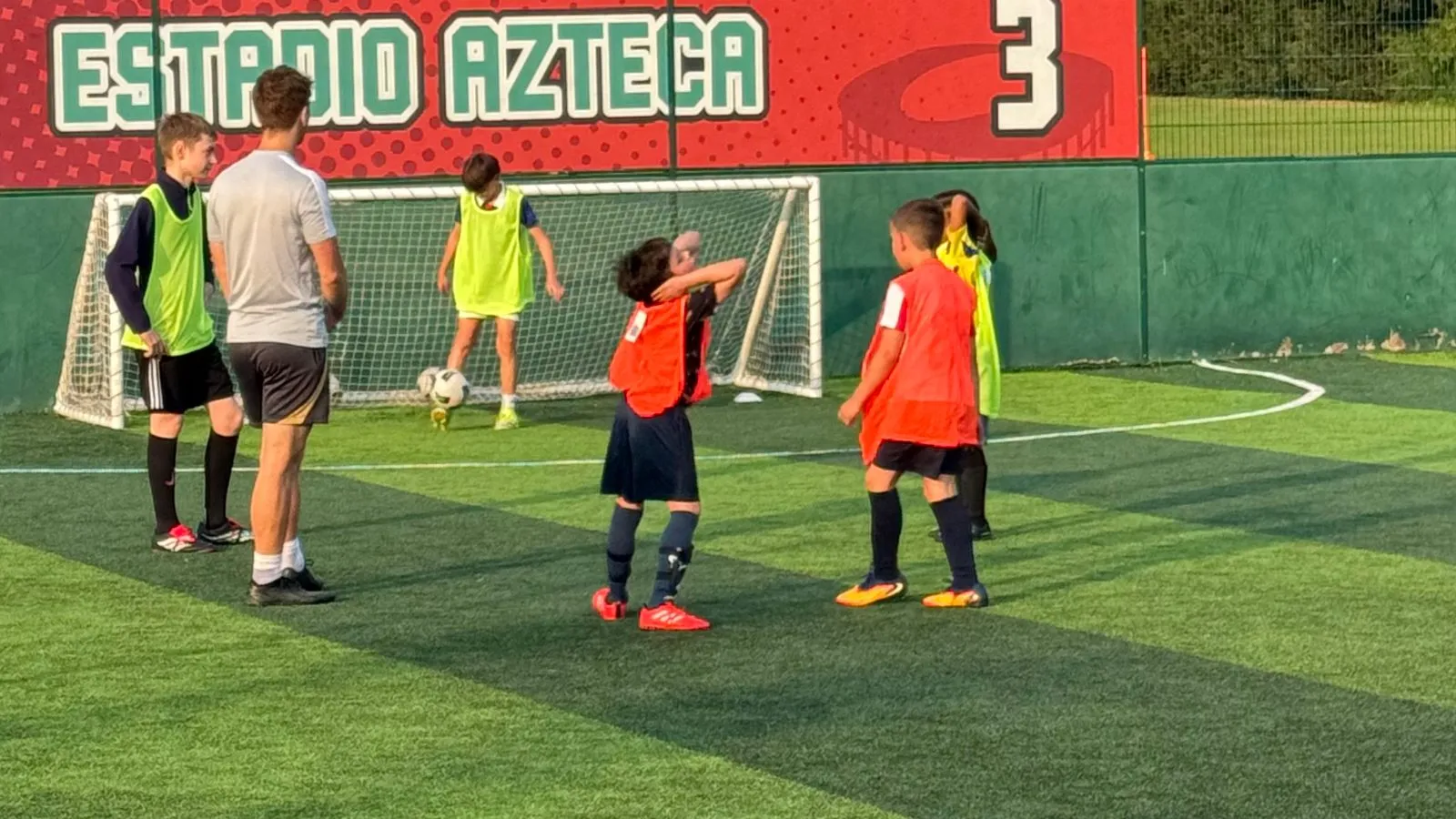
We are a football development centre, so every session is coaching, built around small-sided games. Beginners and experienced players train together in three age groups:
- Minis, ages 4–7: first touches, balance and simple games. Most children in this group are new to football.
- Juniors, ages 8–12: passing, receiving and first ideas about positions, with lots of 3v3 and 4v4.
- Teens, ages 13–17: for experienced players and teenagers starting late, with technique, tactics and fitness.
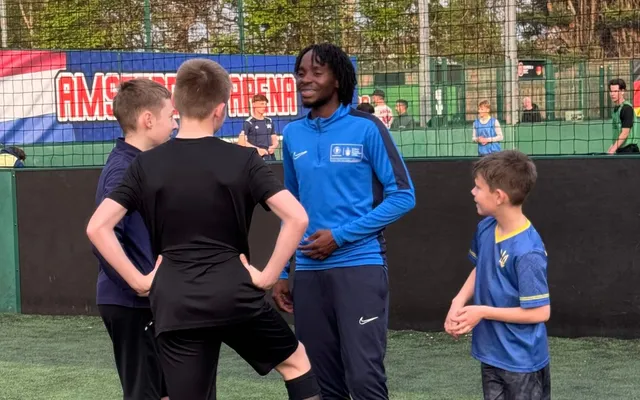
Our coaches are DBS-checked and know how to help a nervous first-timer settle. See our venues for session days and times. Your child's first session is free: book a free trial and we'll place them in the right group from their date of birth.
Further reading: what age children can start football and school holiday football camps.
Want to put this into practice? We run weekly sessions for ages 4–17 at Goals Tolworth. Book a free trial.