Football Training for Kids: What Good Sessions Look Like
What a good football session for children looks like: the signs to watch for, how an hour should run, what changes from age 4 to 17, and the red flags to avoid.

Every football academy says its sessions are fun, professional and age-appropriate. From the side of the pitch, those words are hard to check. What you can check is what happens in the hour itself: how often your child touches the ball, how long they stand still, what the coach says and how your child talks about it in the car.Good football training for kids keeps a ball at every child's feet, plays games sized for their age, coaches in short bursts and sends children home tired and keen to come back. We coach children aged 4 to 17 at Goals Tolworth in south-west London. Below is what a good session looks like, minute by minute and age by age, and the questions to ask before you choose a club.
Six signs of a good session
Stand on the touchline for ten minutes and watch for these.
- The ball is moving. Most children have a ball, or share one with a partner, for most of the hour. Children improve through touches, and touches only happen when there are enough balls.
- Nobody queues. Count how long your child waits for a turn. If they stand in a line longer than they play, the practice is set up wrong.
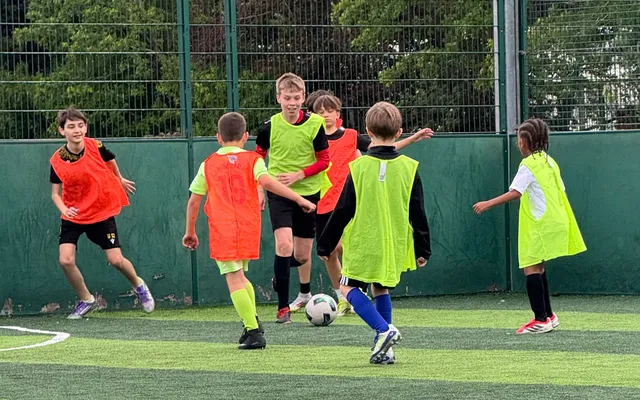
- Games are small. 1v1, 2v2 and 4v4 games give every child more touches, shots and decisions than a big match. The quiet children get the ball as often as the loud ones.
- The coach talks for seconds, not minutes. Good coaches show something once, give one coaching point and let the children play. They correct mistakes inside the game, often with a quick question rather than a speech.
- There is an opponent. Passing patterns with no one trying to win the ball look tidy and teach little. Real decisions only happen when someone is trying to stop you.
- Effort gets praised. Listen to what the coach celebrates. Trying a skill that fails, looking up before receiving and winning the ball back all deserve praise. A child praised only for goals learns to stop taking risks.
Inside a good 60-minute session
Most academy sessions for children run for an hour, sometimes 90 minutes for older groups. The exact games change every week, but a well-built hour usually follows the same shape.
- 0–10 minutes: warm up with the ball. Dribbling, moving and changing direction, with a ball from the first minute. No laps of the pitch. Younger children play a tag game; older players add movement work such as hops, landings and quick turns.
- 10–25 minutes: one skill. The session has one theme, such as turning, first touch or 1v1 attacking. Players practise it in a busy space with lots of repetitions, then with a defender added.
- 25–40 minutes: the skill in a game. A small-sided game with a rule that rewards the theme. If the theme is turning, a goal after a turn counts double. This is where the skill starts to stick.
- 40–55 minutes: free play. A proper match with few stops. The coach steps back, watches and picks one or two moments to praise or correct.
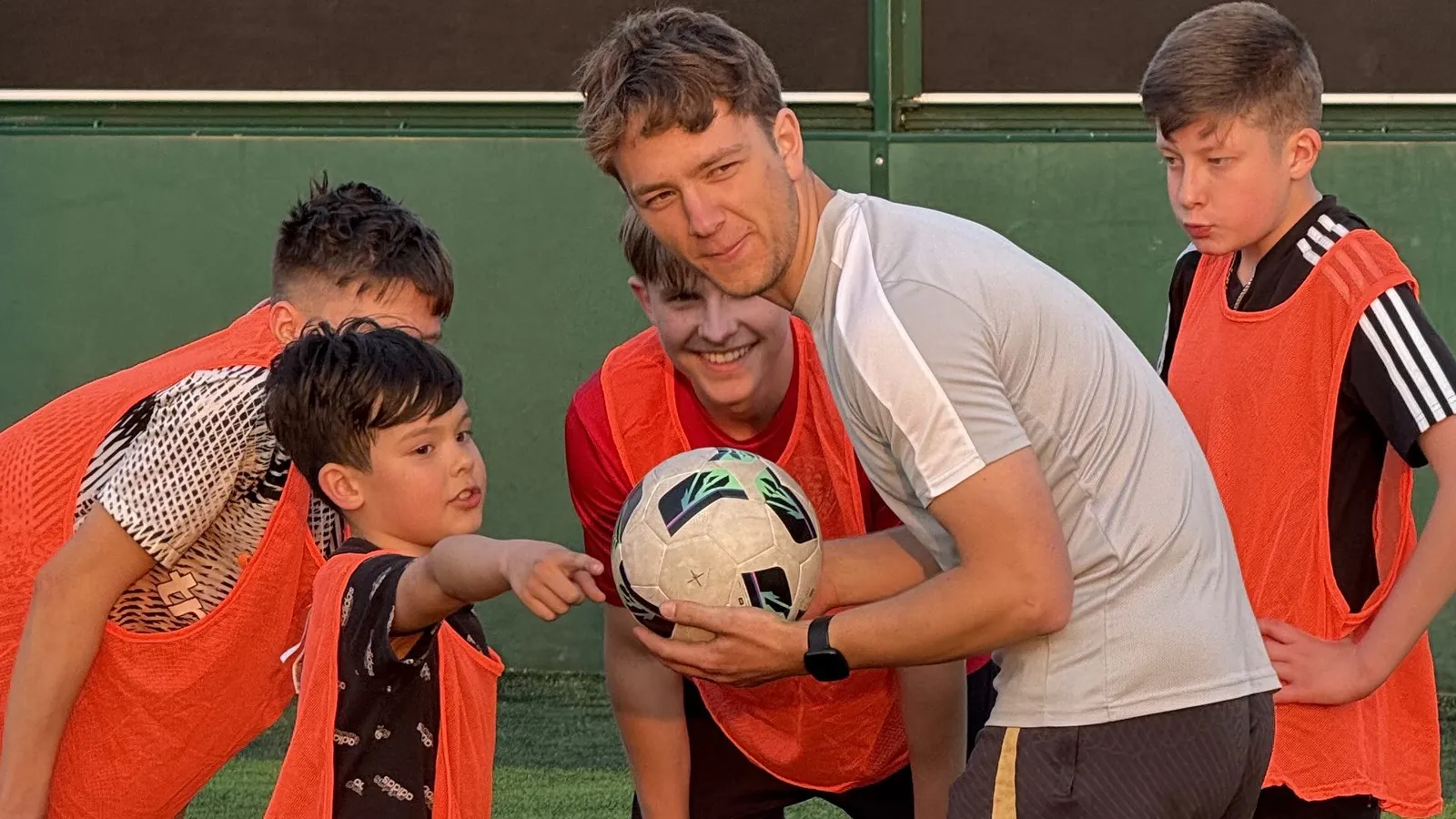
- 55–60 minutes: one takeaway. A short huddle. What did we work on, who did it well, and what to try at home.
That last part is easy to skip and worth looking for. One parent wrote to us after a session in March 2026 that "at the end of each session, the coach analyzes the game, points out mistakes, and explains how to correct them." Children who know what they worked on remember it the following week.
What a good session looks like at each age
The FA describes player development in four parts: technical, physical, psychological and social. All four matter at every age, but the balance shifts as children grow, so the session should too.
Ages 4–7
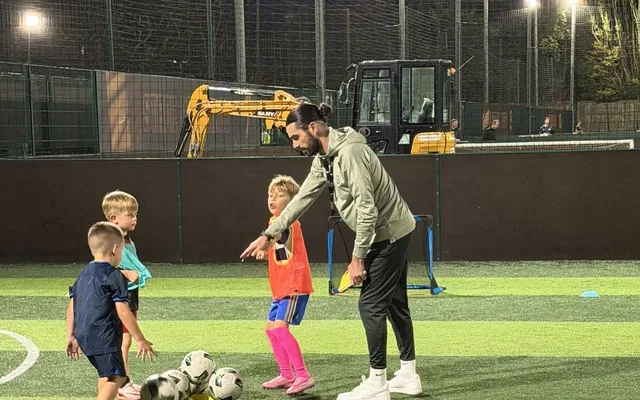
The session is built around the child and the ball. Every child has one. Games last a few minutes, rules are simple and goals come easily, because a child who scores wants to keep playing. Coaches use stories and characters ("dribble past the sleeping dragon") instead of instructions. You will see a lot of stopping the ball, changing direction and shooting, and no positions or tactics at all. Our guide to football practice for 4–7 year olds has five games that work at home.
Ages 8–12
Children this age learn technique faster than they ever will again, so a good session spends most of its time on first touch, both feet, dribbling and passing. They also start to notice space and teammates, so you will see rondos, 1v1s and small-sided games that ask them to make decisions. In England, matches grow from 7v7 to 9v9 across these years, and training should prepare players for each step. Our six practice games for 8–12 year olds come with a full session plan.
Ages 13–17
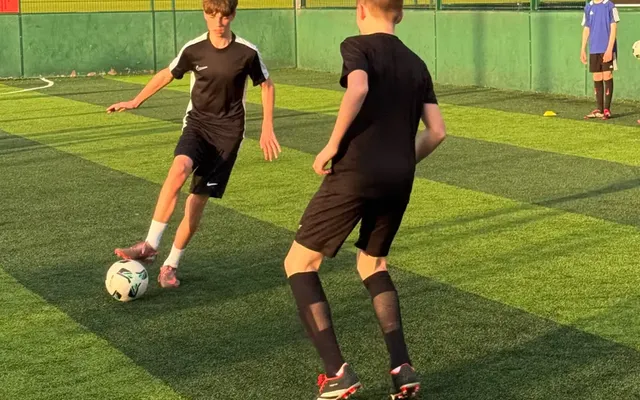
Sessions now include tactics: when to press, how a team keeps its shape, what each position asks of a player. Coaching gets more direct, and good teenagers start asking questions back. Growth spurts make this age uneven. A player can look clumsy for a few months while their legs outgrow their balance, so the ball work carries on through all of it. Strength work should be supervised and based on technique, not heavy weights. If your teenager is new to the game, read is my child too late to start football?
Red flags in a kids' training session
- Laps of the pitch or fitness runs without a ball.
- Long queues behind a cone for a shot or a drill.
- A coach who shouts at children for mistakes.
- Fixed positions and full-size games for under-8s.
- The same few confident players getting the ball while the rest watch.
- A five-year-old and an eleven-year-old in the same practice with no changes for either.
None of these makes a child a better player, and each one gives children a reason to stop coming.
How long and how often?
For children under 8, an hour is plenty, and one session a week plus free play at home is a good start. From 8 to 12, one or two sessions a week suits most children, plus a weekend match if they play for a team. Teenagers who are serious about the game can train two or three times a week, with at least one full rest day.The UK Chief Medical Officers recommend that children are active for an average of at least 60 minutes a day across the week. Football covers part of that. Other sports cover the rest well, and children who play more than one tend to move better and are less likely to burn out on football by fifteen.
Questions to ask before you choose a club
- What qualifications do the coaches hold? An FA or UEFA licence means the coach was trained to plan sessions for children, not just to run drills.
- Are coaches DBS-checked and trained in safeguarding and first aid? The answer should be yes for every coach, and the club should have a written safeguarding policy. Our guide to choosing a safe football club lists the questions to ask.
- How many children does each coach look after? Fewer children per coach means more touches and more feedback for yours.
- Where do sessions run in winter? Floodlit artificial pitches keep training going when grass pitches close. More in our winter training guide.
- Will you tell me how my child is getting on? You should hear what your child does well and what they are working on next.
- Can my child try a session first? A club that believes in its sessions will let you see one before you pay. Here is what to expect at a free trial.
Weighing up an academy against a grassroots team? Our article on academy vs club football compares them.
Football training for kids in Tolworth
Konevych FDC runs weekly football training for children aged 4 to 17 at Goals Tolworth on Kingston Road, KT5 9NT. Sessions run on Tuesday and Thursday evenings on floodlit 3G pitches, in three age groups: Minis (4–7), Juniors (8–12) and Teens (13–17). Our head coaches hold the UEFA C licence. Families come to us from Tolworth, Surbiton, Worcester Park and across Kingston upon Thames.One session a week costs £64 a month, which works out at £16 a session, or £15 on a six-month plan. A single session is £20 and there is no joining fee. For how that compares across London, see what kids' football training costs.The first session is free, and we never ask for a card. Bring boots, shin pads and a water bottle, and arrive ten minutes early so the coach can meet your child. Then watch the hour and judge it against this page. Book a free trial.
Questions parents ask
How long should a football training session be for kids?
About 45 to 60 minutes for children under 8, and 60 to 90 minutes for older players. Longer sessions for young children usually mean more standing around, not more learning.
What age can kids start football training?
Most children are ready at about four, in short, playful sessions with a ball each. Read more in what age can kids start football?
Does my child need to be good at football to join?
No. Group training is for every level, including complete beginners. A good coach sets each game so that a beginner and a confident player both get something from the same session.
Will training help my child get into an academy?
Good training makes any child a better player, but no coach can promise a professional academy place, and you should be wary of anyone who does. Look instead for steady progress in your child's touch, decisions and confidence. Our article on five signs of real football potential explains what coaches look for.
Want to put this into practice? We run weekly sessions for ages 4–17 at Goals Tolworth. Book a free trial.