5 Signs Your Child Has Real Football Potential
Goals and flashy skills are easy to spot. The signs coaches actually look for are quieter: scanning, resilience, coachability, and making teammates better.

Every coach gets asked the same question on the touchline: "Is my child any good?" Usually the parent asking has just watched their son or daughter score, or do a turn they saw on YouTube, or run past three players in a row.
Those moments are fun to watch, but they tell a coach less than you'd think. At 7, 9 or even 12, the things that predict how far a player goes are mostly invisible from the sideline. Here are five we watch for at Konevych FDC, plus one that matters much less than most parents assume.
1. They play when nobody asks them to
Lots of children like football. Fewer go and find a ball on their own. Look for the child who kicks against the garage wall after school, juggles in the garden while dinner cooks, or turns up to training ten minutes early and starts practising before the session begins.
This matters because skill comes from repetition, and one or two sessions a week can't supply enough of it. The players who improve fastest get most of their touches when no coach is watching. If your child does this without being told, protect it. Don't turn it into homework.
2. They look up before the ball arrives
Watch your child's head during a game, not their feet. Do they glance over their shoulder before a pass reaches them? Do they already know where they're going to play it next?
Coaches call this scanning, and it's one of the clearest signs of game intelligence. A player who scans has more time on the ball, because they made their decision before the ball arrived. It's also hard to see unless you're looking for it, which is why a quiet midfielder who never loses the ball can be the most promising player on the pitch while the goalscorer gets all the praise.
3. They want the ball straight back after losing it
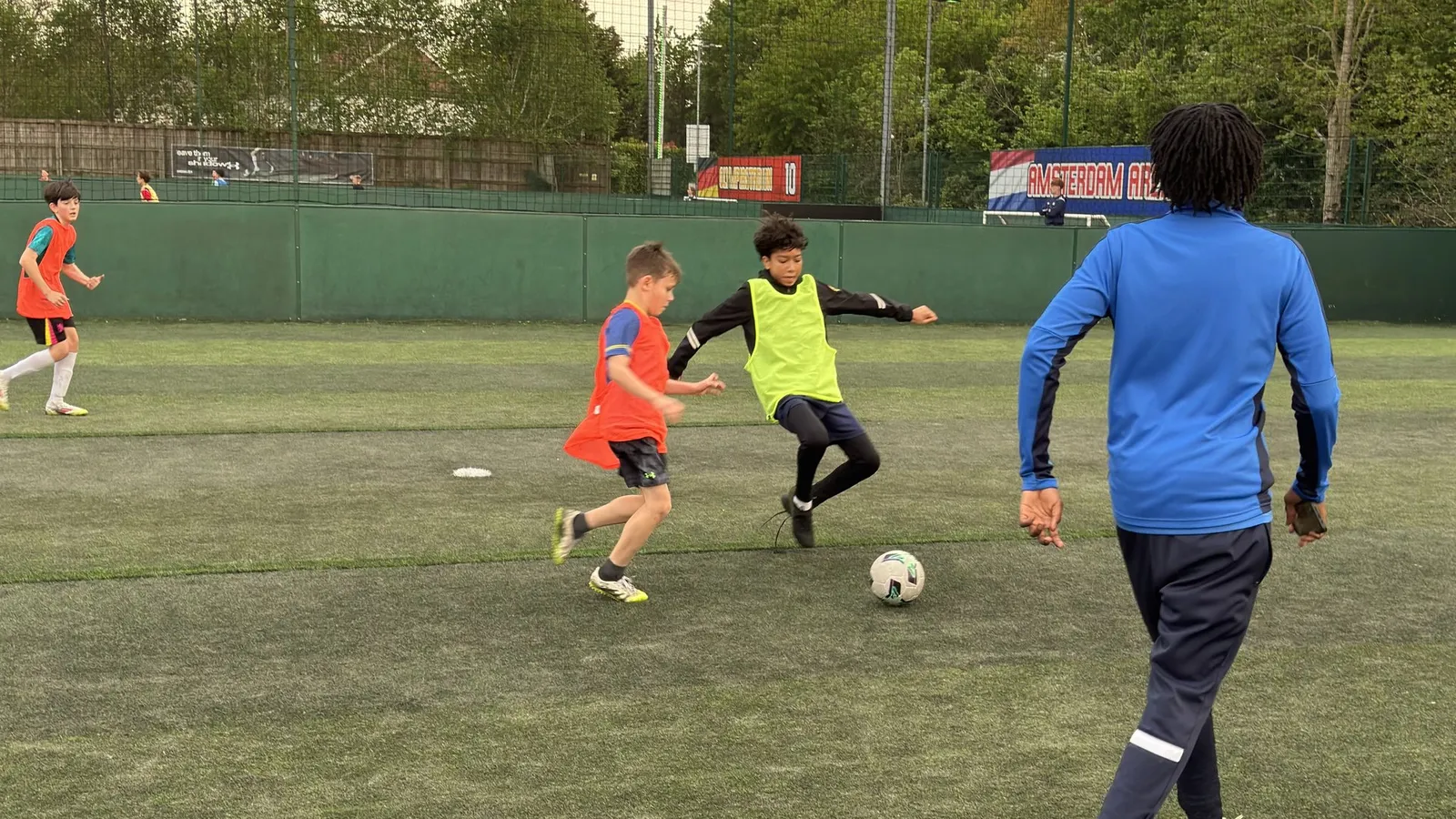
Every young player gets tackled, misses chances and has bad games. What separates them is the next ten seconds. Some children drop their heads and drift out of the game. Others chase back, win it again and ask for it.
That reaction can't be faked, and it carries over to everything else: a hard drill they can't do yet, a tougher age group, a season on the bench. Resilience can also be coached. It grows in environments where mistakes are treated as part of learning, not something to be shouted at.
4. They try new things, even when it makes them worse at first
Ask a child to use their weaker foot and most will quietly go back to their strong one the moment the coach turns away. The ones to watch keep trying the new thing, even though it costs them the ball and looks clumsy for a few weeks.
Being coachable is underrated. A naturally gifted 8-year-old who only does what already works often gets overtaken by a less gifted one who's happy to fail in training. Ask your child what they worked on in their last session. If they can tell you, and they're still practising it at home, that's a good sign.
5. They make the players around them better
Football is a team game, and the best young players figure that out early. They pass to a teammate in a better position instead of shooting from a bad angle. They talk, point and organise. They celebrate other people's goals.
Coaches at every level notice this. A player who lifts a team is worth more than one who only lifts their own stats, and that awareness gets more valuable as the game gets faster and more tactical.
What matters less than you think: being the best at 7
The biggest, fastest child in an under-8s game often looks like the star. That advantage is often temporary. In the English school year, a child born in September can be almost a year older than a teammate born in August, and at 7 that's a big physical difference.
Early developers win games by being stronger, so they sometimes never learn to beat a player with skill or awareness. When everyone else catches up physically, usually in the teenage years, the players who learned to think their way through games pull ahead. So if your child is small, younger for their year, or not scoring much, don't count them out. And if they're the biggest on the pitch, make sure they're learning the game, not just winning it.
Seen some of these signs? Here's what to do
Don't rush. Talent at 8 isn't a reason for extra sessions every night or a move to the most competitive team you can find. Children who burn out rarely come back to the game. The ones who keep loving it are the ones who keep improving.
What helps most:
- Proper coaching in small groups. Each child gets more touches and more individual feedback than in a big squad.
- Training that matches their stage. A 6-year-old needs a different session from a 12-year-old, even if both are talented.
- Space to make mistakes. Players develop where trying something new is praised, not punished.
- Enjoyment first. If they're not having fun, nothing else on this list lasts.
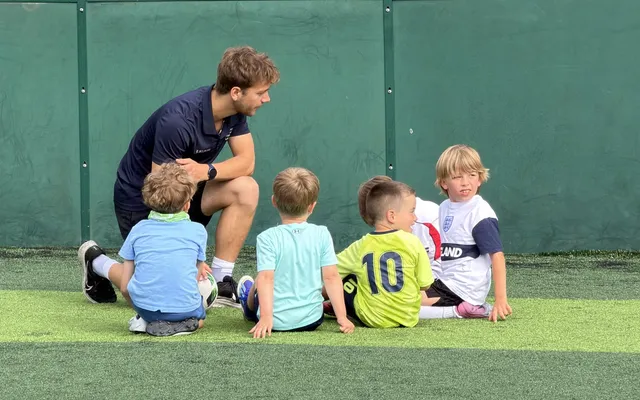
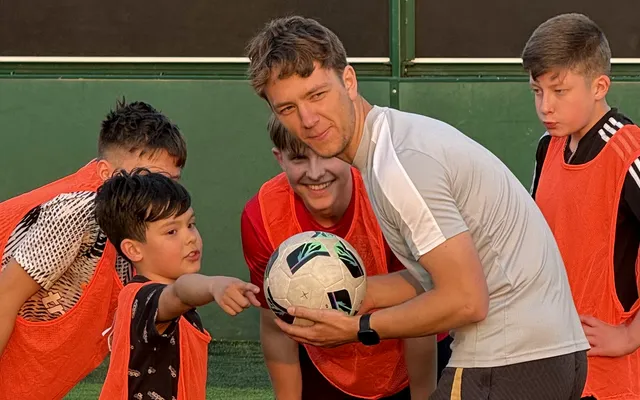
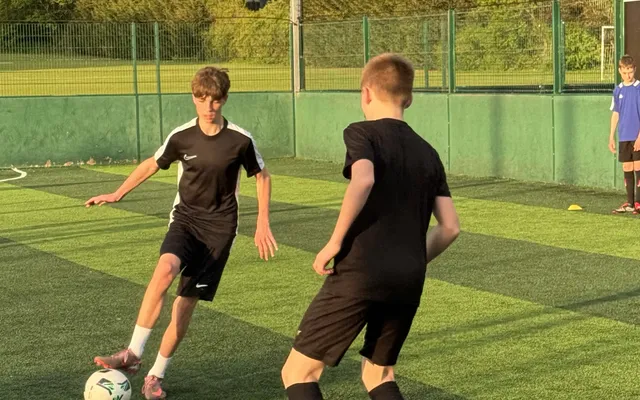
At Konevych FDC in Tolworth, we coach children aged 4 to 17 in small, age-grouped sessions led by UEFA-licensed coaches. If you'd like a coach to see your child play and tell you what they notice, the first session is free.
Want to put this into practice? We run weekly sessions for ages 4–17 at Goals Tolworth. Book a free trial.