Football training for 8–12 year olds: six games
Between eight and twelve, football starts to make sense. Six practice games that build control, passing and decisions, how each changes from under-9s to under-12s, and a full 60-minute session.
The age where football starts to make sense
Something changes between eight and twelve. A child who spent last year chasing the ball with everyone else starts to notice space. They look up before they receive it. They pass because a teammate is free, not because a grown-up shouted "pass". For a lot of players this is when football stops being running around with a ball and becomes a game they understand.
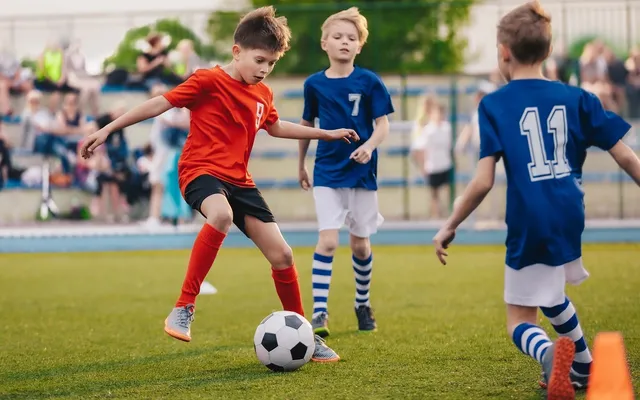
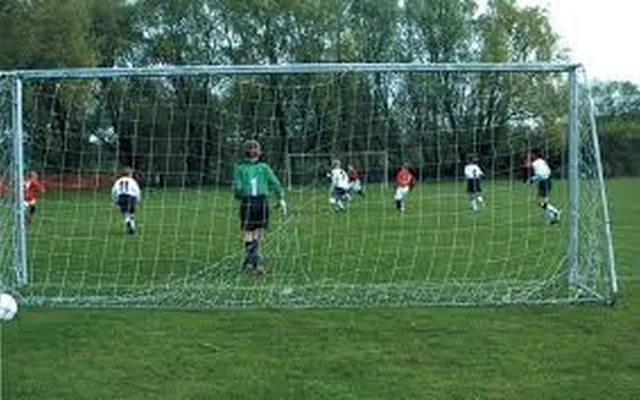
The games change around them too. In England, under-9s and under-10s play 7v7, under-11s and under-12s play 9v9, and 11v11 arrives at under-13. Every step adds teammates, space and decisions. Practice at this age has one job: get players ready for bigger games without losing what made them love the small ones.
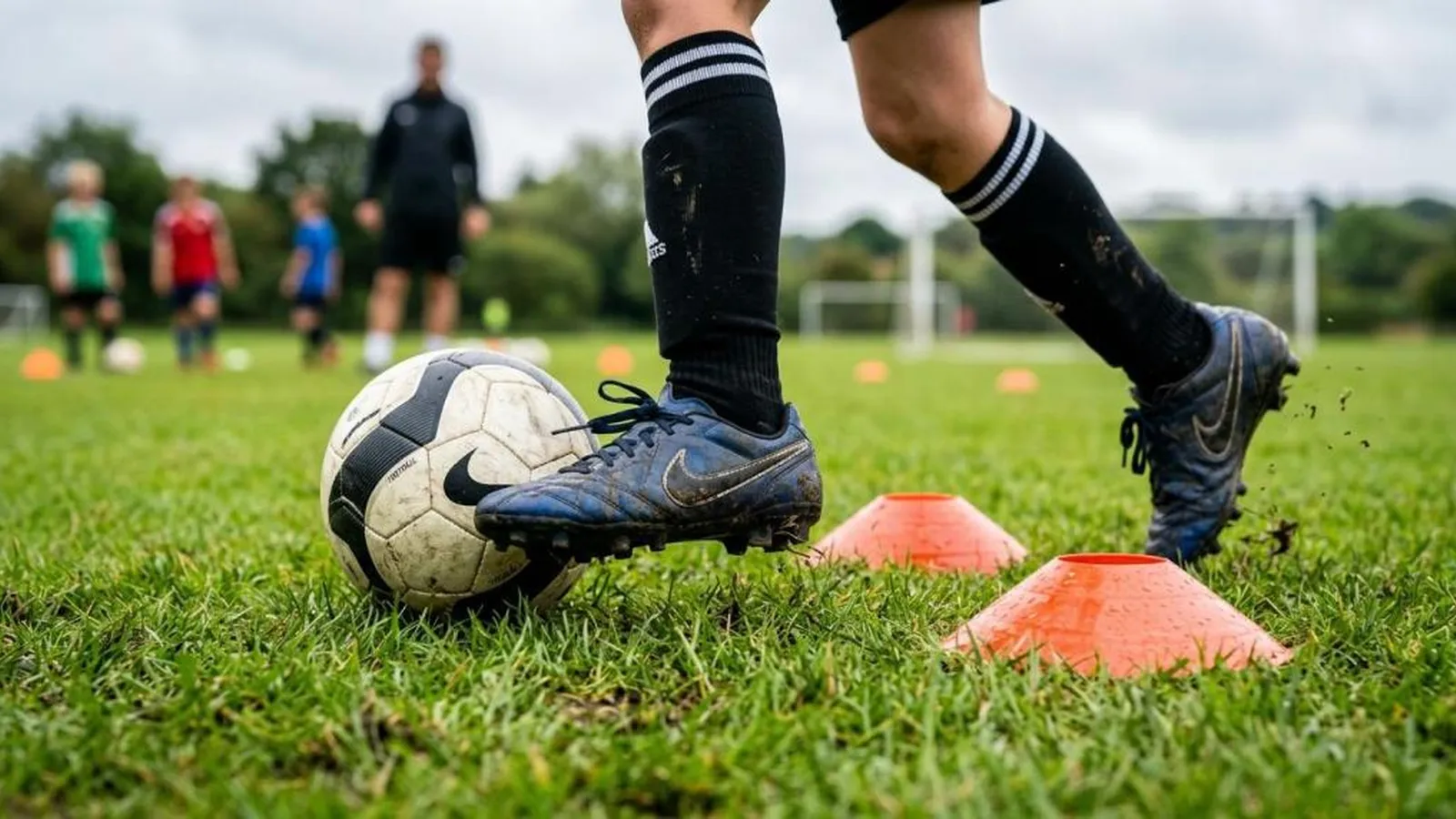
Below are six practice games we rate for 8 to 12 year olds, how each one changes from under-9s to under-12s, and a 60-minute session that puts them together. They work for a volunteer coach with a bag of cones and for a parent with a park and two children.
The games change around them too. In England, under-9s and under-10s play 7v7, under-11s and under-12s play 9v9, and 11v11 arrives at under-13. Every step adds teammates, space and decisions. Practice at this age has one job: get players ready for bigger games without losing what made them love the small ones.
Below are six practice games we rate for 8 to 12 year olds, how each one changes from under-9s to under-12s, and a 60-minute session that puts them together. They work for a volunteer coach with a bag of cones and for a parent with a park and two children.
What good practice looks like at 8–12
Before the games, four rules that decide whether any of them work.</p>
Nobody stands in a line. If a player spends more time queuing than touching the ball, the practice is broken. One ball per player or per pair, and small groups.
Talk for 30 seconds, then play. Show it once, give one coaching point, and let them go. Fix things during the game, not before it.
Always an opponent, sooner or later. Unopposed passing patterns look tidy but teach little. Real decisions only exist when someone is trying to take the ball.
Praise the right things. Trying a skill that fails, looking up, asking for the ball, winning it back after losing it. A player praised only for goals learns to stop taking risks.
Nobody stands in a line. If a player spends more time queuing than touching the ball, the practice is broken. One ball per player or per pair, and small groups.
Talk for 30 seconds, then play. Show it once, give one coaching point, and let them go. Fix things during the game, not before it.
Always an opponent, sooner or later. Unopposed passing patterns look tidy but teach little. Real decisions only exist when someone is trying to take the ball.
Praise the right things. Trying a skill that fails, looking up, asking for the ball, winning it back after losing it. A player praised only for goals learns to stop taking risks.
Six practice games for 8 to 12 year olds
1. Gates
Set-up. Scatter eight to ten small gates (two cones a metre apart) across a 30 by 30 metre area. Players work in pairs with one ball.
How it works. Pairs score a point every time they pass through a gate to each other. They cannot use the same gate twice in a row, so they have to move, find a new gate and call for the ball. Play for 90 seconds, then count.
What it teaches. Passing weight, first touch, and the habit of moving after you pass. With every pair using the same space, players have to look around constantly to avoid collisions, which is exactly the scanning they need in a match.
At 8–9. Big gates, two touches allowed, any foot.
At 11–12. Receive across the body on the back foot and play out the other side. Add two "thieves" who try to steal a ball and keep it.
How it works. Pairs score a point every time they pass through a gate to each other. They cannot use the same gate twice in a row, so they have to move, find a new gate and call for the ball. Play for 90 seconds, then count.
What it teaches. Passing weight, first touch, and the habit of moving after you pass. With every pair using the same space, players have to look around constantly to avoid collisions, which is exactly the scanning they need in a match.
At 8–9. Big gates, two touches allowed, any foot.
At 11–12. Receive across the body on the back foot and play out the other side. Add two "thieves" who try to steal a ball and keep it.
2. Sharks
Set-up. A 20 by 20 metre square with a few cone circles ("islands") inside it. Every player has a ball except two sharks.
How it works. Players dribble around the sea. Islands are safe, but only for three seconds. Sharks try to win a ball and knock it out of the square. Anyone who loses their ball becomes a shark.
What it teaches. Close control with the head up. Players have to watch the sharks, the islands and the ball at the same time. Changes of direction and speed come naturally, because standing still gets you caught.
At 8–9. Plenty of islands, one or two sharks.
At 11–12. Remove islands every minute. Players can only escape a shark with a named move: a drag-back, an outside cut or a step-over.
How it works. Players dribble around the sea. Islands are safe, but only for three seconds. Sharks try to win a ball and knock it out of the square. Anyone who loses their ball becomes a shark.
What it teaches. Close control with the head up. Players have to watch the sharks, the islands and the ball at the same time. Changes of direction and speed come naturally, because standing still gets you caught.
At 8–9. Plenty of islands, one or two sharks.
At 11–12. Remove islands every minute. Players can only escape a shark with a named move: a drag-back, an outside cut or a step-over.
3. 1v1 to two goals
Set-up. A channel about 15 metres long and 10 wide. Two small goals at one end, a queue of defenders at the other end with the balls, attackers halfway down.
How it works. The defender passes to the attacker and immediately goes to close them down. The attacker can score in either goal. The duel ends on a goal, a tackle, or the ball leaving the channel. Swap roles every go.
What it teaches. The courage to run at an opponent, which is the skill most easily coached out of young players. Two goals force the attacker to look at the defender and go the other way. For defenders, it teaches how to approach: fast at first, then slow down and stay on your feet.
At 8–9. Wide channel, big goals, defender starts a few metres further back.
At 11–12. Narrow the channel. Add a five-second limit. Let the defender score by dribbling back over the start line after a tackle, so every duel has a transition in it.
How it works. The defender passes to the attacker and immediately goes to close them down. The attacker can score in either goal. The duel ends on a goal, a tackle, or the ball leaving the channel. Swap roles every go.
What it teaches. The courage to run at an opponent, which is the skill most easily coached out of young players. Two goals force the attacker to look at the defender and go the other way. For defenders, it teaches how to approach: fast at first, then slow down and stay on your feet.
At 8–9. Wide channel, big goals, defender starts a few metres further back.
At 11–12. Narrow the channel. Add a five-second limit. Let the defender score by dribbling back over the start line after a tackle, so every duel has a transition in it.
4. Shield and steal
Set-up. Pairs in a small square, about 8 by 8 metres. One ball.
How it works. The player with the ball scores by keeping it for five seconds, or by dribbling out of any side of the square. The partner tries to win it. Then swap.
What it teaches. Using the body to protect the ball: side-on, knees bent, arm out for balance, ball on the far foot. Players who can shield start to enjoy pressure rather than panicking under it. It also teaches defending without diving in, because a lunge gets turned.
At 8–9. Five seconds is a long time. Start at three.
At 11–12. The player shielding must finish with a pass to a coach standing outside the square, so they learn to shield <em>and</em> look up.
How it works. The player with the ball scores by keeping it for five seconds, or by dribbling out of any side of the square. The partner tries to win it. Then swap.
What it teaches. Using the body to protect the ball: side-on, knees bent, arm out for balance, ball on the far foot. Players who can shield start to enjoy pressure rather than panicking under it. It also teaches defending without diving in, because a lunge gets turned.
At 8–9. Five seconds is a long time. Start at three.
At 11–12. The player shielding must finish with a pass to a coach standing outside the square, so they learn to shield <em>and</em> look up.
5. Rondo (4v1, then 5v2)
Set-up. A 10 by 10 metre square. Four players around the outside, one in the middle.
How it works. The outside players keep the ball away from the defender in the middle. Whoever gives the ball away swaps in. Count passes in a row and try to beat the group record.
What it teaches. Passing angles and the idea of support: when a teammate has the ball, move so there is a clear line to you. It is the practice that teaches players to find space, and it makes the step up to 7v7 and 9v9 far easier.
At 8–9. 4v1 in a bigger square, unlimited touches.
At 11–12. 5v2 with a two-touch limit. Two defenders who win the ball can score by making three passes between themselves.
How it works. The outside players keep the ball away from the defender in the middle. Whoever gives the ball away swaps in. Count passes in a row and try to beat the group record.
What it teaches. Passing angles and the idea of support: when a teammate has the ball, move so there is a clear line to you. It is the practice that teaches players to find space, and it makes the step up to 7v7 and 9v9 far easier.
At 8–9. 4v1 in a bigger square, unlimited touches.
At 11–12. 5v2 with a two-touch limit. Two defenders who win the ball can score by making three passes between themselves.
6. End-zone game (3v3 or 4v4)
Set-up. A 30 by 20 metre pitch with a three-metre end zone at each end instead of a goal.
How it works. A team scores by dribbling into the end zone and stopping the ball on the line, or by passing to a teammate who runs into it. No goalkeepers, no offside, kick-ins instead of throw-ins to keep the ball moving.
What it teaches. Everything above, in a game. Dribble or pass? Go now or wait for support? End zones reward forward runs and give quieter players more chances to score than a small goal does. With three or four a side, every player touches the ball constantly and nobody can hide. We have written more on why small-sided games work.
At 8–9. 3v3, any way of scoring counts.
At 11–12. 4v4 with a rule that changes every few minutes: all four players must be in the opposition half to score, or a pass into the end zone is worth double.
How it works. A team scores by dribbling into the end zone and stopping the ball on the line, or by passing to a teammate who runs into it. No goalkeepers, no offside, kick-ins instead of throw-ins to keep the ball moving.
What it teaches. Everything above, in a game. Dribble or pass? Go now or wait for support? End zones reward forward runs and give quieter players more chances to score than a small goal does. With three or four a side, every player touches the ball constantly and nobody can hide. We have written more on why small-sided games work.
At 8–9. 3v3, any way of scoring counts.
At 11–12. 4v4 with a rule that changes every few minutes: all four players must be in the opposition half to score, or a pass into the end zone is worth double.
A 60-minute session plan
Put the games together like this and nobody stands still for more than a minute.
- Warm-up (10 minutes). FIFA's 11+ Kids warm-up, or dribbling in a square with calls to change direction, stop the ball and speed up. More on warming up well in our guide to physical training for young footballers.
- Ball-mastery game (10 minutes). Sharks.
- Pairs or small group (10 minutes).</strong> Gates at 8–9, rondo at 10–12.
- Duels (10 minutes).</strong> 1v1 to two goals, or shield and steal.
- Game (15–18 minutes).</strong> End-zone game, then normal goals for the last five minutes.
- One question (2 minutes).</strong> "When did you look up before you got the ball today?" One question, one or two answers, done.
Keep the same theme running through the session. If the day is about playing forward, the rondo scores for a pass that splits the defenders, and the end-zone game rewards the forward run.
Common mistakes with this age group
- Fixed positions too early. A ten-year-old who only ever plays at left-back learns one part of the game. Rotate players through positions, including goalkeeper, until at least 12.
- Coaching from the touchline. "Pass!" and "Shoot!" make the decision for the player. The game is where they learn to make it themselves.
- Chasing results. At under-9s nobody remembers the score by teatime. A team that wins by playing the biggest child up front is not developing anyone, including the biggest child.
- Long, unopposed passing lines. Twenty passes against nobody tell you very little about what happens against somebody.
- Too much fitness work without a ball. At this age the best conditioning is a small-sided game played at full effort.
For parents: practice at home
You do not need cones or a coaching badge. Three things make a difference between sessions.
A wall. Pass against it with the right foot, then the left, then one touch. Count how many in a row. Wall passing builds first touch faster than almost anything else.
A 1v1. A few minutes of your child trying to dribble past you into a small goal. Let them win often enough to keep trying; at 11 or 12, make them earn it.
Weak foot time. Ten minutes of anything, left foot only (or right, if they are left-footed). Players who can use both feet have twice the options when a defender closes them down.
Across the week, the UK Chief Medical Officers recommend children average at least 60 minutes a day of moderate to vigorous activity. Football practice counts, and so does playing in the park with friends, which is still some of the best football education there is.
A wall. Pass against it with the right foot, then the left, then one touch. Count how many in a row. Wall passing builds first touch faster than almost anything else.
A 1v1. A few minutes of your child trying to dribble past you into a small goal. Let them win often enough to keep trying; at 11 or 12, make them earn it.
Weak foot time. Ten minutes of anything, left foot only (or right, if they are left-footed). Players who can use both feet have twice the options when a defender closes them down.
Across the week, the UK Chief Medical Officers recommend children average at least 60 minutes a day of moderate to vigorous activity. Football practice counts, and so does playing in the park with friends, which is still some of the best football education there is.
Questions parents ask
How long should football practice be for an 8 to 12 year old?
60 to 75 minutes works for most. Longer than 90 minutes and quality drops, especially at eight or nine.
How many sessions a week?
Two structured sessions plus a match is plenty for most children in this age group, with free play on top. Keep at least one day a week without organised sport.
Should my child specialise in football at this age?
No need. Playing other sports up to around 12 builds balance, coordination and agility that carry straight back into football, and lowers the risk of overuse injuries and burnout.
My child is small for their age. Will that hold them back?
Not for long. Children grow at very different times, and the smaller player often develops better control and decision-making because they cannot rely on size. Keep them playing and enjoying it.
The short version
At 8 to 12, give every player a ball, keep explanations short, put an opponent in almost everything, and finish with a small-sided game. Adapt each practice as they grow: bigger spaces and more touches at eight, tighter spaces, fewer touches and faster decisions at twelve. Do that week after week and they will be ready when the pitch gets bigger.
Want to put this into practice? We run weekly sessions for ages 4–17 at Goals Tolworth. Book a free trial.