Kids' Football in Teddington and Twickenham
Where children aged 4–17 can play football around Teddington, Twickenham and Hampton Wick, what to look for in a club, and how our Saturday sessions at Teddington Lock work.

Short answer: Konevych FDC runs Saturday football training for children aged 4 to 17 at Teddington Lock, on the all-weather pitch at 10 Broom Road, Teddington TW11 9NW. Sessions are led by UEFA-licensed coaches, children train in age groups (Minis 4–7, Juniors 8–12, Teens 13–17), and the first session is free.
This guide is for families in Teddington, Twickenham, Hampton Wick, Strawberry Hill and Ham. It covers the kinds of football on offer for children, how to get to our Saturday sessions, what to look for in a club, and how to book a free first session.
What kinds of kids' football are there around Teddington?
Most children's football falls into three types, and many families use more than one.
- Grassroots clubs run teams that play league matches, usually at weekends. Your child joins a squad and plays fixtures.
- Development sessions, like ours, focus on coaching: small groups, lots of time on the ball and small-sided games, with no league table. They suit beginners and players who want to improve, and they work well alongside a club team.
- Holiday camps fill school breaks with full days of football. Dates go up on our holiday football camps page.
For the difference in more depth, read academy vs club football: which is right for your child.
Why do Saturday sessions suit so many families?
Weekday evenings are crowded: homework, tea, siblings' clubs and the rush home from school or work. A Saturday session sits outside all of that. Children arrive rested rather than straight from a long school day, and there is no race across town in rush-hour traffic.
A weekend session also helps children who are new to football. It feels like something they have chosen, not another lesson, and parents often have more time to talk to the coach at hand-over and see how their child is settling in. For many working parents in Teddington and Twickenham, Saturday is the only slot in the week that fits.
Where do the Teddington sessions take place?
We train on the all-weather pitch at 10 Broom Road, Teddington TW11 9NW, a few minutes on foot from Teddington Lock. Boots for artificial grass, moulded studs or astro trainers work best; our guide to which football boots work on 3G pitches explains the labels.
How do I get there from Twickenham, Hampton Wick or Ham?
- By train: Teddington station is about 12 minutes on foot. Trains from Twickenham stop at Strawberry Hill and then Teddington.
- From Ham: cross the Thames on the Teddington Lock footbridge, then walk up to Broom Road.
- From Kingston and Hampton Wick: cross Kingston Bridge and head north through Hampton Wick to Teddington.
Which age groups train on Saturdays?
All three: Minis (ages 4–7), Juniors (ages 8–12) and Teens (ages 13–17). Children train with others their own age, and coaches adapt the games to each group. Teenagers are welcome even if they have never played in a team; football training for 13–17 year olds explains what they need. If you are unsure which group fits, see football age groups for 2026–27.
What happens in a Saturday session?
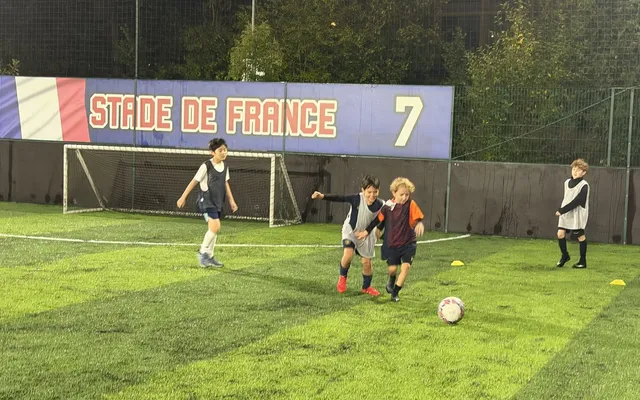
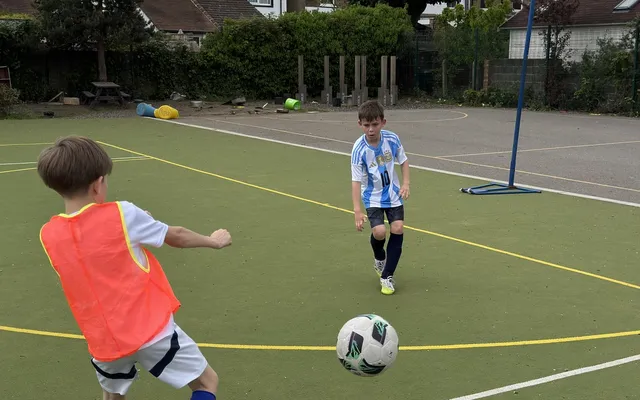
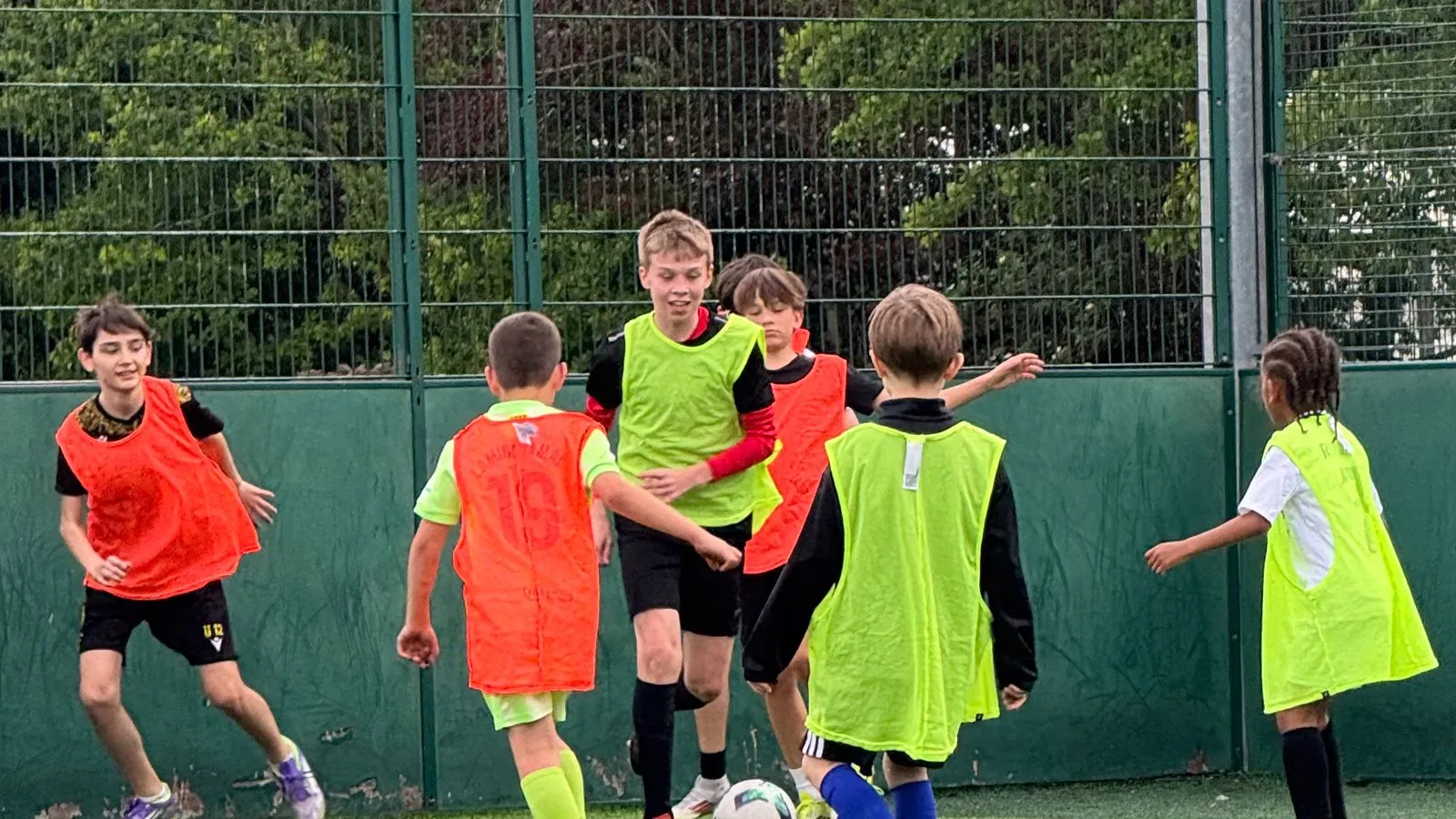
Every session follows the same idea: plenty of football and very little standing still. Children warm up with a ball rather than running laps, then spend most of the session in small-sided games, from 1v1 up to 4v4 for the younger groups, with the pitch size and rules adjusted to the age group. Small games give every child more touches, more decisions and more goals, which is why small-sided football is now the norm for young children in England. Our article on why 4v4 works explains the evidence.
Coaching happens inside the games: a short, specific pointer, then straight back to playing. There are no long talks on the touchline and no queues behind a cone.
What does each age group work on?
- Minis (ages 4–7) learn to love the ball: first touches, dribbling, stopping the ball and scoring lots of goals in simple games. At this age enjoyment comes first and skills follow. Our guide to football practice for 4–7 year olds shows what that looks like.
- Juniors (ages 8–12) start to understand the game: when to pass and when to dribble, how to protect the ball and how to find space. This is the age where football starts to make sense to children; see six practice games for 8–12 year olds.
- Teens (ages 13–17) work on the bigger game: positions, movement off the ball, decisions under pressure and the fitness to keep going. Many teenagers join to get fit, to play with friends or to prepare for a school or club team.
My child has never played. Is that a problem?
No. Plenty of children start with no team experience at all, including teenagers. Groups are organised by age rather than ability, and coaches can give a beginner a simpler target inside the same game, so nobody is left out or singled out. If your child is starting later than their friends, our guide to whether it is too late to start football explains what a late start does and does not change, and your child's first month covers the early weeks.
When are the Saturday sessions?
Sessions run every Saturday. We confirm the exact time when you book your child's free session, and the Teddington Lock venue page always shows the current timetable. If Saturdays don't suit, our weekday sessions run on Tuesday and Thursday evenings at Goals Tolworth, on the Kingston side of the river.
What should my child bring?
- Football boots for artificial grass, moulded studs or astro trainers. Most artificial pitches ban metal studs, so leave those at home.
- Shin pads, if you have them.
- A full water bottle.
- Comfortable sports kit, plus layers or a waterproof for the weather.
On the first day, arrive about ten minutes early so the coach can meet your child before the start.
What happens if it rains?
Sessions run outdoors, so dress your child for the weather and pack a waterproof layer when rain is forecast. Artificial pitches drain quickly, so rain on its own rarely stops play. In severe weather a session can be cancelled; if you are unsure, message us on WhatsApp before you set off.
Can I stay and watch?
Hand your child over to the coach in person at the start and collect them on time at the end. If you would like to stay and watch, ask the coach on the day. Younger children often settle faster when they can see a parent nearby, while older ones usually prefer you out of earshot.
What should I look for in a kids' football club?
- Coaches with recognised qualifications, such as the UEFA C licence, and an enhanced DBS check.
- A named safeguarding lead and a written safeguarding policy you can read.
- Small groups, so your child touches the ball often instead of standing in a queue.
- Games matched to age: small-sided games for younger children, more tactical play for teenagers.
- A free first session, so your child can try it before you commit.
Our full checklist is in how to choose a safe football club for your child.
How does Konevych FDC meet that checklist?
Our head coach, Andrii Konevych, holds the UEFA C licence. Every coach has an enhanced DBS check, the club has a Designated Safeguarding Lead, and there is a first aid kit at every session. You can read about the people who run sessions on our coaches page, and the rules we work to in our club policy.
How active should children be each week?
The UK Chief Medical Officers recommend that children and young people aged 5 to 18 do an average of at least 60 minutes of moderate or vigorous physical activity a day across the week. One football session will not cover that on its own, but it is a regular hour of running, turning and playing with friends that many children look forward to all week.
How much does it cost?
Your child's first session is free, and we never ask for a card to book it. After that you can choose a monthly membership or pay for single sessions. Current prices, and what each plan includes, are in the pricing section of our home page. Holiday camps are priced separately.
Can my child play for a club team as well?
Yes, and many do. Club football and development sessions do different jobs: a club gives your child a team, fixtures and a league, while our sessions give them more time on the ball and coaching between matches. A Saturday session works alongside a club team as long as the kick-off times do not clash, so check your child's fixture list before you pick a slot.
How do I book a free trial?
Enter your child's date of birth on the free trial page, pick the Saturday session at Teddington Lock, then confirm from the email we send you. There is no card to enter, and nothing to cancel if your child decides football isn't for them. Our guide to what to expect at your child's free football trial covers the day itself.
Sources
- UK Chief Medical Officers' physical activity guidelines, Department of Health and Social Care
- Physical activity guidelines for children and young people, NHS
Want to put this into practice? We run weekly sessions for ages 4–17 at Goals Tolworth and Teddington Lock. Book a free trial.