Football training for teenagers: what 13–17s need
At 13 the game changes: 11-a-side, bigger pitches, growth spurts and exams. What teenagers need from training, how often to train, and how to keep them playing.

Teenagers aged 13 to 17 need football training that matches the game they now play: 11-a-side, bigger pitches, more tactics and more physical contact. Good teen training teaches positions and decisions, builds strength and fitness gradually through growth spurts, and keeps football enjoyable, because the teenage years are when many young players stop.
We coach a Teens group for ages 13 to 17 at Konevych FDC. This guide explains what changes in football at this age, what growth spurts do to a young player, how often to train, and what a good teenage session looks like.
What changes in football at 13?
The match itself changes. Under England Football's FutureFit formats, under-12s and under-13s play up to 9v9 with a size 4 ball. From under-14, which is school Year 9, teams play 11v11 with a full-size ball, and matches last 70 to 90 minutes. Our football age groups guide shows which group your child is in by birth date.
Three other things change at the same time:
- Positions matter more. In 11-a-side a player has a job without the ball: holding a line, covering a teammate, knowing where to stand when play is on the far wing.
- Bodies differ more. In one year group some teenagers have nearly finished growing and others have not started. Two 14-year-olds can be a head apart in height.
- Time gets tighter. GCSEs, friends and part-time jobs all compete with football, often in the same years.
Growth spurts: what parents should know
A growth spurt can make a skilful player look clumsy for a few months. Longer legs and a higher centre of gravity take time to control, and first touch and balance can dip before they come back. This is normal and temporary. Judge progress over a season, not a month.
Professional academies take growth seriously. The Premier League's Growth and Maturation Screening programme measures academy players regularly so clubs can see who is going through peak growth and adjust training to reduce the risk of growth-related injury. Some academies also use bio-banding: grouping players by biological age instead of birthday, so late developers are not judged against teammates who are physically two years ahead.
The lesson for parents is simple: a small 13-year-old is not a worse footballer, just a later one. Many late developers catch up physically and keep the skills they had to learn to survive.
Watch for pain, too. The NHS lists Osgood-Schlatter's disease, pain and swelling below the kneecap, among the common causes of knee pain in teenagers. If your child's knees or heels hurt during or after football, tell the coach, cut back on hard running and jumping, and see a GP if the pain does not improve within a few weeks.
How often should a teenager train?
One session a week keeps skills ticking over and suits a busy school year. Two sessions a week suit a teenager who wants to improve quickly or who is aiming for a school or club team. More than that is rarely needed, particularly during a growth spurt.
Count everything your child already does: school PE, a school team, a weekend club match. A teenager who plays four hard sessions a week does not need a fifth. They need rest and good sleep, which is when growing bodies recover.
In exam years, drop to one session rather than stopping. An hour of football is a break from revision, and keeping the routine makes it much easier to come back after exams.
What good teenage training looks like
A good session for 13 to 17-year-olds looks different from one for younger children. Look for:
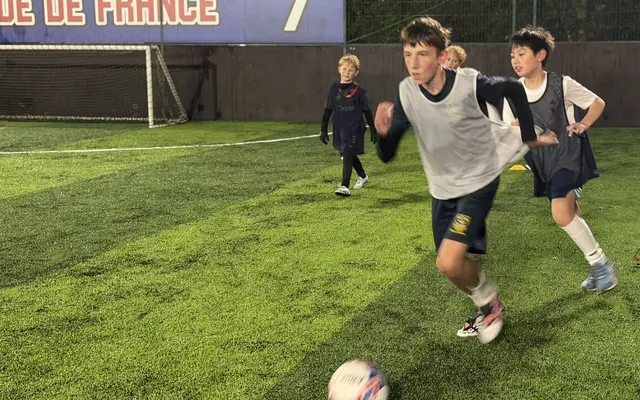
- Games that look like real football. Small-sided games with a tactical condition, such as winning the ball back within five seconds, then larger games where the condition has to hold.
- Coaching on decisions, not only technique. When to press, when to drop, which pass breaks a line. Teenagers can handle the reasons behind a drill, and they play better when they understand them.
- Strength and fitness built gradually. Bodyweight strength, balance and mobility work, increased slowly and adjusted for players who are growing fast.
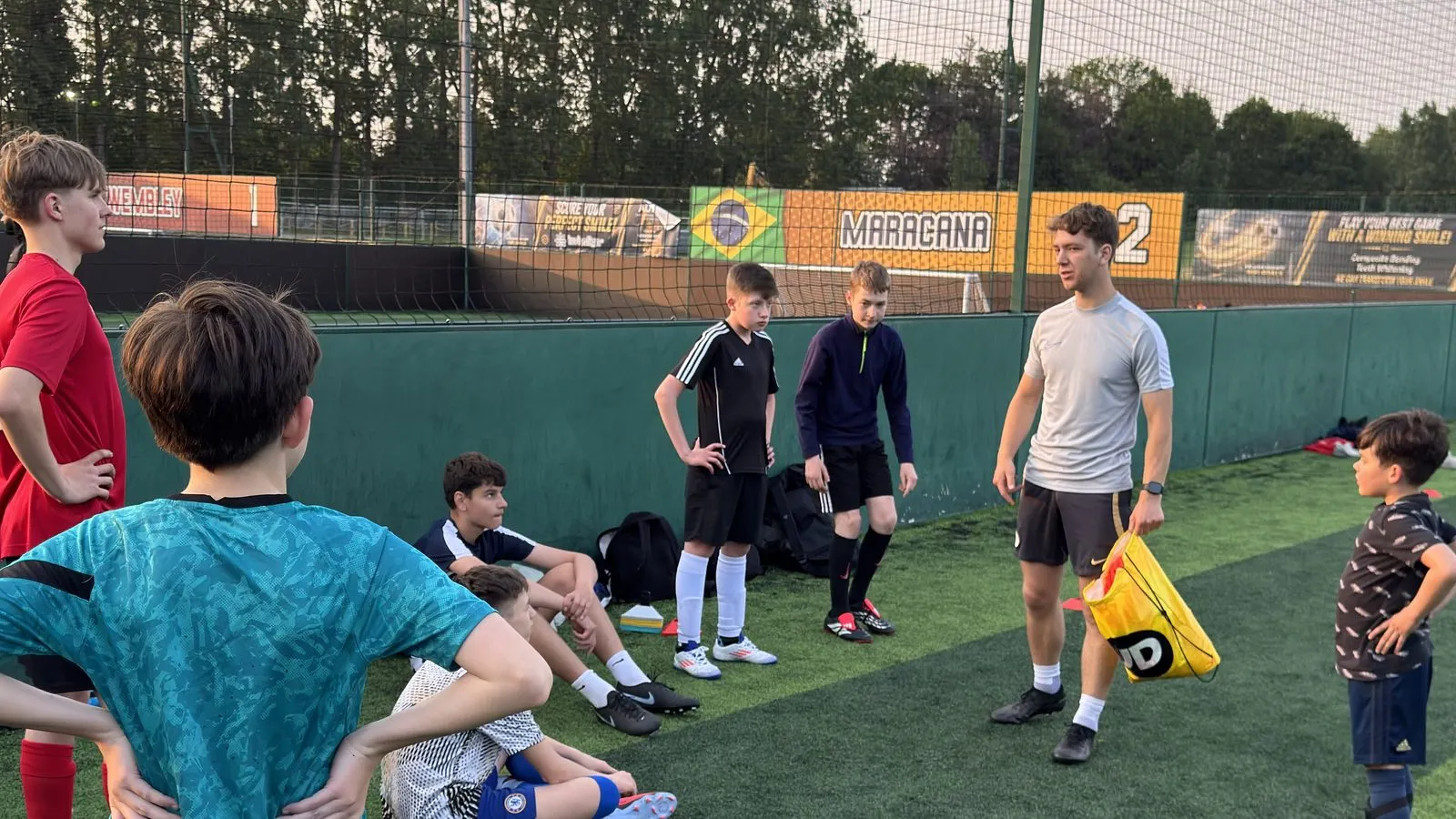
- Coaches who treat them like players. Asking questions, giving responsibility such as leading a warm-up or captaining a side, and explaining feedback instead of shouting it.
- Their own age group. Teenagers progress fastest with players their own age. Being grouped with much younger children is one of the quickest ways to lose a 14-year-old.
For more on what a good hour of coaching contains at any age, see our guide to what good football training looks like.
Keeping teenagers in the game
Many teenagers who stop playing football do so because it stopped being fun, not because they were not good enough. Common reasons are pressure from the touchline, being left out of a team, feeling behind friends who have played longer, and simply having less time.
Small things help:
- Ask "did you enjoy it?" on the way home, before anything about goals or mistakes.
- Let them train with friends, or make friends in the group. Teenagers keep going to places where they belong.
- Praise effort and improvement over results. A teenager who is getting better stays interested.
- Let them have a say in how much they play, especially in exam years.
If your teenager has lost confidence, our article on why children lose confidence in football explains the warning signs and what helps.
Starting football as a teenager
A teenager who has never played properly can still join a team, get fit and enjoy the game. They will not catch up overnight with someone who started at five, and they do not need to. Our guide is my child too late to start football? covers late starters in detail.
If your teenager is hoping for a professional academy, read how to get into a football academy in south-west London first. It explains how scouting works and gives the honest odds.
Teenage football training at Konevych FDC
Our Teens group is for ages 13 to 17 and trains on Tuesday and Thursday evenings on floodlit outdoor 3G pitches at Goals Tolworth, where you can see the current session times. Sessions cover 11-a-side ideas, tactics and fitness, for experienced players and for teenagers starting late. Teens train separately from our Juniors (8 to 12).
Every session is led by UEFA-licensed coaches. If you are not sure what a coaching badge means, our guide to football coaching badges explains each level. Training starts from £64 a month for one session a week, and your teenager's first session is free: book a free trial.
Common questions
Is 13 too old to start football?
No. Thirteen-year-olds learn quickly and follow coaching well. Expect a few weeks of catching up on basics, then steady progress with one or two sessions a week.
How many times a week should a 14-year-old train?
One or two sessions of coaching a week is enough for most 14-year-olds, plus a weekend match if they play for a team. Cut back if they are tired, sore or going through a growth spurt.
My teenager has knee pain after football. What should we do?
Tell their coach and reduce hard running and jumping for a while. Pain and swelling just below the kneecap is common in active teenagers. The NHS advises seeing a GP if knee pain does not improve within a few weeks, or sooner if you are worried.
Do teenagers train with younger children?
Not with us. Our Teens group is for ages 13 to 17 and trains separately from the Juniors group for ages 8 to 12.
Sources
All checked October 2026:
Want to put this into practice? We run weekly sessions for ages 4–17 at Goals Tolworth. Book a free trial.