What Football Boots Should Kids Wear on 3G Pitches?
AG, moulded studs or astro trainers? A clear parent’s guide to kids’ football boots for 3G pitches, with fit advice and current guidance for Goals Tolworth.
Choosing football boots for a child can feel harder than it should. Product labels mention AG, FG, astro and moulded studs, while every pitch seems to have its own rules. The useful starting point is the surface your child will play on, followed by fit and comfort. The most expensive pair is rarely the first thing a young player needs.
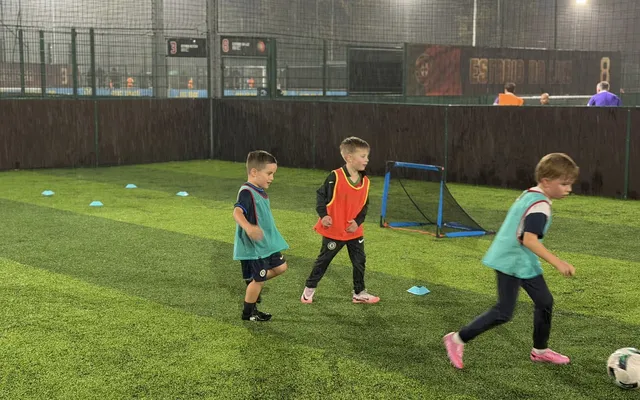
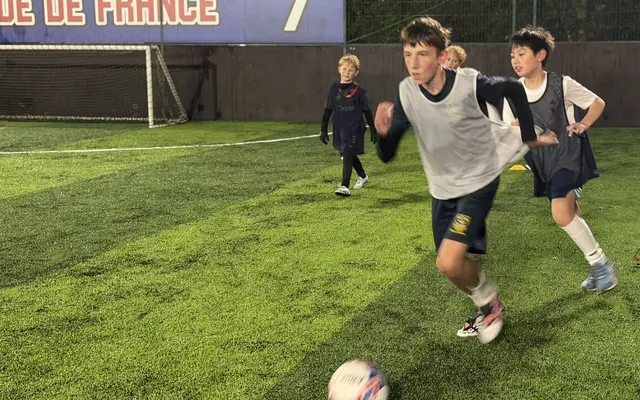
At Goals Tolworth, where Konevych FDC runs weekly sessions on outdoor artificial grass, our venue guide recommends football boots with moulded studs or astro trainers. The Football Association also advises players to check the rules of the individual facility, because the pitch operator sets the final footwear requirements. This guide explains what the labels mean, what to check before you buy, and what to bring to a first session.
At Goals Tolworth, where Konevych FDC runs weekly sessions on outdoor artificial grass, our venue guide recommends football boots with moulded studs or astro trainers. The Football Association also advises players to check the rules of the individual facility, because the pitch operator sets the final footwear requirements. This guide explains what the labels mean, what to check before you buy, and what to bring to a first session.
The quick answer: choose the pitch before the boot
For a 3G artificial grass pitch, start with a pair labelled for artificial grass (often AG) or a pair with suitable moulded studs. Astro trainers, which have many small rubber nubs, may also be allowed by the venue. At Goals Tolworth, the club’s current guidance is moulded-stud football boots or astro trainers. Check the latest venue instructions if you are unsure, particularly before buying boots for a new pitch.
Do not assume that a boot suitable for natural grass is automatically suitable for artificial turf. Firm-ground (FG) boots vary, and some have long or bladed studs that a facility may not permit. Do not assume that metal studs are allowed on 3G. The pitch operator’s guidance takes priority over a general rule or a label on a shoe box.
Do not assume that a boot suitable for natural grass is automatically suitable for artificial turf. Firm-ground (FG) boots vary, and some have long or bladed studs that a facility may not permit. Do not assume that metal studs are allowed on 3G. The pitch operator’s guidance takes priority over a general rule or a label on a shoe box.
What is a 3G pitch?
Third-generation artificial grass, usually shortened to 3G, uses longer synthetic fibres with infill. It is designed for football and looks and feels different from the short, sand-filled artificial surface often called 2G. The distinction matters because a sole that feels comfortable on one kind of artificial turf may not suit another.
Most parents do not need to identify a pitch by looking at the turf. Check the venue’s information or ask the coach. Our sessions at Goals Tolworth take place on outdoor 3G pitches; the Goals Tolworth venue guide lists what to wear and bring. If your child is training somewhere else, ask that facility which sole types it permits.
The FA’s general 3G guidance says that acceptable footwear can depend on the facility and recommends checking with the site operator. That is why a friend’s answer, a boot retailer’s category or a rule from another club may not settle the question for your child’s pitch.
AG, FG and astro trainers: what the labels mean
Boot naming is not perfectly consistent across brands. Treat the letters as a useful clue, then inspect the sole and confirm the venue’s rules.
AG boots for artificial grass
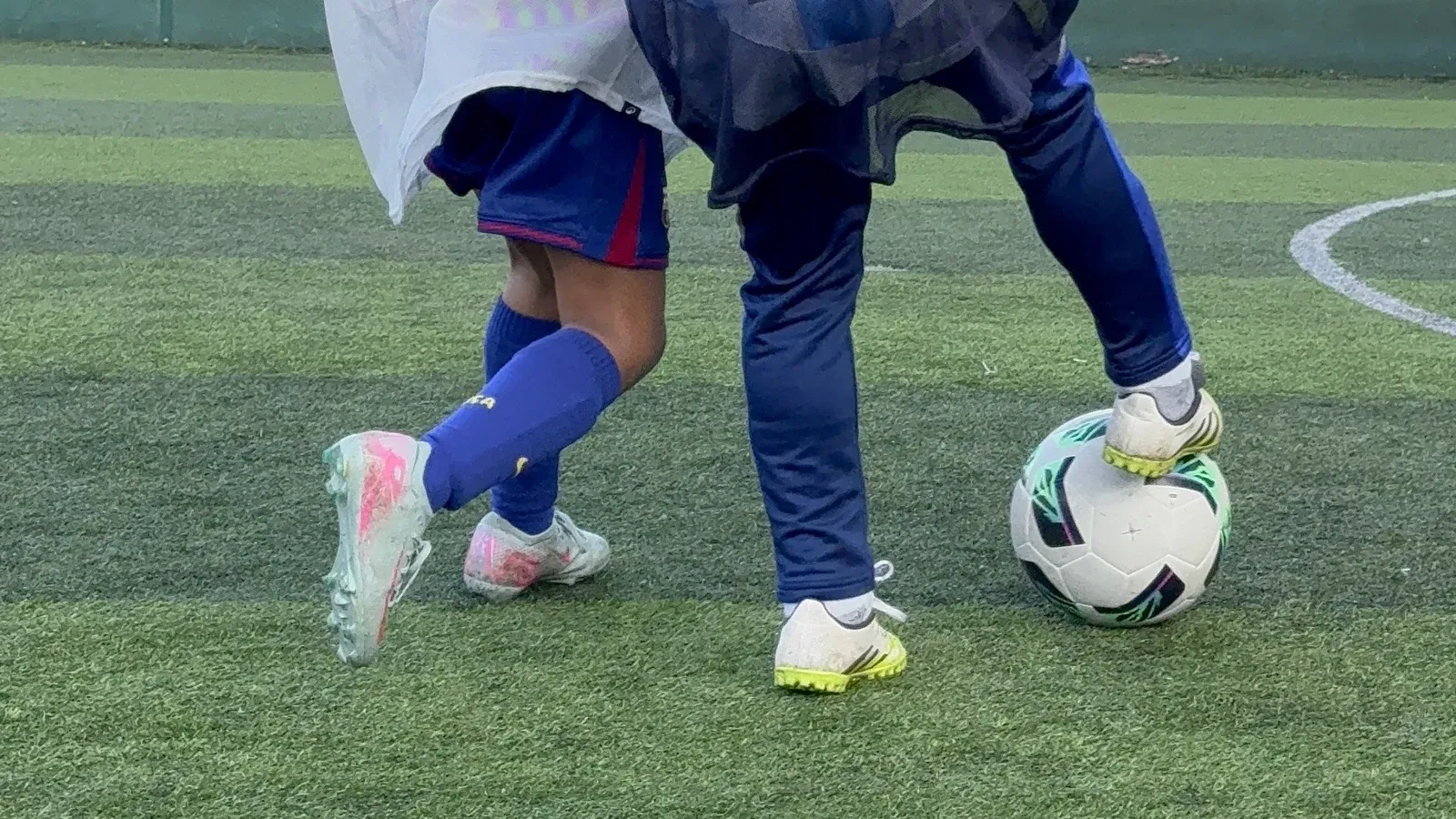
AG stands for artificial grass. These boots are made for synthetic surfaces; the sole often uses a greater number of shorter studs than a traditional firm-ground plate. The exact pattern differs by brand and model. If your child plays on 3G most weeks, an AG pair is a sensible category to compare, provided the pitch accepts that sole.
Read the manufacturer’s description for the particular model rather than relying only on the letters in its name. A boot can be marketed for more than one surface, and not every multi-surface plate is identical. If the product page is unclear, take a photograph of the outsole and ask the venue before you order.
Read the manufacturer’s description for the particular model rather than relying only on the letters in its name. A boot can be marketed for more than one surface, and not every multi-surface plate is identical. If the product page is unclear, take a photograph of the outsole and ask the venue before you order.
Moulded-stud boots
Moulded studs are fixed to the sole and are usually made from plastic or rubber. They are not removable screw-in studs. Many children already own a moulded-stud pair, and at Goals Tolworth the club’s venue guidance recommends moulded studs for the 3G pitches. Check that the studs are evenly distributed, not damaged, and suitable for the facility.
Do not judge a pair only by how aggressive the tread looks in a product photograph. A complicated sole does not guarantee a better fit or a better session. For a growing player, a comfortable boot with an accepted outsole is a more useful choice than a premium model that pinches or slips.
Do not judge a pair only by how aggressive the tread looks in a product photograph. A complicated sole does not guarantee a better fit or a better session. For a growing player, a comfortable boot with an accepted outsole is a more useful choice than a premium model that pinches or slips.
Astro or turf trainers
Astro trainers, also called turf trainers, have many small rubber nubs or dimples across a flat-ish sole. The FA’s broad guidance does not treat them as the ideal choice for every 3G surface, but individual venues can set their own rules. Our current guidance for Goals Tolworth allows astro trainers as an option. If your child’s next session is at a different facility, check again; the same pair may not be accepted everywhere.
Astro trainers can be a practical option for children who find studded boots uncomfortable or who use different surfaces. Fit still matters: the heel should feel secure, the toes should not be pressed together, and the sole should feel stable when the child changes direction.
Astro trainers can be a practical option for children who find studded boots uncomfortable or who use different surfaces. Fit still matters: the heel should feel secure, the toes should not be pressed together, and the sole should feel stable when the child changes direction.
FG boots, blades and metal studs
FG means firm ground and usually describes boots for natural grass. Some FG boots have conventional moulded studs; others have long, narrow or bladed shapes. Because outsole designs vary, do not assume every FG pair is permitted on 3G. Check the boot itself and the venue’s policy.
Bladed studs and metal studs deserve extra caution. Some artificial pitches restrict them because of the surface or the way they interact with it. Screw-in studs can be made from different materials, so “screw-in” and “metal” are not interchangeable terms. For a child’s session at Goals Tolworth, follow the club’s recommendation of moulded studs or astro trainers rather than choosing a specialist sole without checking.
Flat-soled indoor trainers are another category. They are made for indoor courts, not outdoor artificial grass, and may lack the tread expected for a football pitch. If your child only has indoor shoes, ask before the session instead of assuming they will be suitable.
What should my child wear at Goals Tolworth?
For regular Konevych FDC sessions at Goals Tolworth, bring boots with moulded studs or astro trainers, shin pads and a named water bottle. Add comfortable sports kit and layers for the weather; sessions take place outdoors, including after dark on floodlit pitches. The venue page has the current directions, arrival advice and session information.
If this is your child’s first football session and you have not bought boots yet, do not rush into an expensive purchase. Check the venue guidance and ask the coach what footwear is acceptable for that session. The club can confirm the current local rule. What works for a 3G pitch at one venue may not work at another.
When you arrive, keep the boots clean enough to avoid carrying grit or mud onto the pitch, and check that the studs are not loose or broken. A coach or venue staff member can tell you if a sole is unsuitable. It is easier to sort this out before the warm-up than after the session begins.
How should football boots fit a child?
Fit matters more than colour, player endorsement or price. Children’s feet grow, and a boot that is too small can make running and striking the ball uncomfortable. A boot that is far too large can move around the foot and make a child feel less secure. Buying several sizes up “to grow into” is not a useful shortcut.
Try boots on with the socks your child will wear for football. Fit both feet, fasten the laces or straps as they will be worn, and ask your child how the boot feels while standing and walking. The toes should have room to move without the foot sliding forward. The heel should stay in place, and the upper should not press painfully across the foot.
Children’s feet are not always the same length or width. The NHS advises that shoes should be the right size and that the fit should not cramp the toes. If you are unsure, have both feet measured by a trained fitter and follow their advice. A child should not have to tolerate rubbing or numbness because a boot needs to be “broken in”.
After buying a pair, check the fit again as your child grows, and especially before a new season or a run of regular sessions. Ask your child whether anything hurts after training. Look inside the boot for worn lining or a rough seam, and check the outsole for damaged studs. If a boot has become tight or uncomfortable, it is time to reassess the fit.
Do children need expensive football boots?
Usually, no. For a child who is new to football or still growing quickly, a well-fitting entry-level pair that follows the pitch rules is enough to get started. More expensive materials or a professional-player colourway do not replace a comfortable fit. Nor do they guarantee that the sole is suitable for the surface where your child trains.
Start by setting the surface and budget. Then look for the right category, try the boots on, and compare comfort. You can also ask whether a family member has a clean, well-fitting spare pair your child can try for a first visit. Avoid hand-me-down boots with compressed insoles, damaged studs or a shape that does not match your child’s foot.
Before paying, check the return policy, especially if you are ordering online. A boot can look right on a screen and feel wrong after a few steps. Keep the packaging until your child has tried the pair indoors, and do not remove tags or wear them outside until you are sure they fit and the sole is accepted.
A simple checklist before you buy
- Confirm whether the child will play on 3G, natural grass, indoor court or another surface.
- Ask the specific venue which sole types it permits.
- Look for AG or suitable moulded-stud options for artificial grass, then check the model details.
- At Goals Tolworth, follow the current club guidance: moulded studs or astro trainers.
- Try both boots on with football socks and fasten them properly.
- Make sure the toes have room, the heel stays secure and nothing rubs.
- Check the outsole for damaged or loose studs before each session.
- Choose a pair your child can move in comfortably; the most expensive option is not required.
Common questions about boots for 3G pitches
Can my child wear ordinary trainers on a 3G pitch?
Do not assume they are allowed. Indoor court trainers and everyday flat-soled trainers are different from astro trainers, which have small rubber nubs. Check with the venue. For Goals Tolworth sessions, the current guidance is moulded-stud boots or astro trainers; message the club if your child has no suitable pair yet.
Are AG boots better than astro trainers?
There is no single answer for every child or every pitch. AG football boots are designed for artificial grass; astro trainers have many small rubber nubs. Both categories may suit a 3G session, but the venue’s rules decide what is accepted. At Goals Tolworth, the club currently recommends moulded studs or astro trainers.
Can children wear FG boots on artificial grass?
Some moulded-stud FG boots may be accepted, while other FG plates, particularly longer or bladed designs, may not be. The label alone does not tell you the venue’s rule. Check the exact outsole and ask the operator before using them on 3G.
Are metal studs allowed on 3G?
Do not take metal-stud boots to a 3G pitch unless the venue has explicitly confirmed they are allowed. Pitch requirements vary, and the FA advises checking with the facility. For our sessions at Goals Tolworth, use the club’s current moulded-stud or astro-trainer guidance.
What if my child is coming for a free trial?
Check the footwear guidance before you set off. Bring shin pads and water as well as suitable footwear, and arrive a few minutes early so the coach can meet your child. You can read more about training at Goals Tolworth or book a free trial.
Ready for the first session?
The choice is simpler once you know the surface: check the venue, choose an accepted outsole, and make sure the boot fits comfortably. For Goals Tolworth, our guidance is moulded studs or astro trainers. If you are still unsure, contact us before buying; we would rather help you choose the right category than see your child arrive in a pair the pitch cannot accept.
Sources and further guidance
Want to put this into practice? We run weekly sessions for ages 4–17 at Goals Tolworth. Book a free trial.