Diogo Coutinho on small-sided games: what it means for kids' training
Why small-sided games beat drills for children, the six variables coaches can change, and what each looks like for ages 4–7, 8–12 and 13–17.

Why small-sided games matter for children
Dr Diogo Coutinho is a sports scientist and coach who studies how small-sided games work. In a Science Explained presentation for the FIFA Training Centre, he explains how coaches can change the rules of a small game to steer what players learn. His audience is coaches at every level, but the ideas matter most with children, because children learn football by playing it, not by listening to it.
A small-sided game is any game with fewer players than a full match: 1v1, 2v2, 4v4, 5v5. A drill trains one thing in isolation. A small game trains technique, fitness and decision-making at once, because the ball, the opponents and the space keep changing. That is why most of a good youth session is games, not queues.
The variables a coach can change
Coutinho groups the coach's options into a handful of variables. Below is how each one shows up in a children's session.
1. Number of players
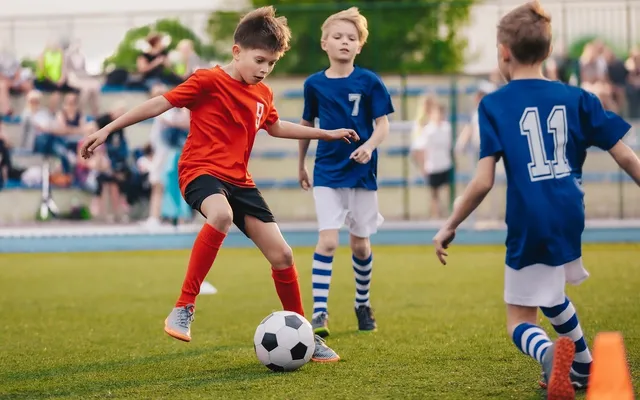
Fewer players means more touches each. In a 3v3 every child is close to the ball; in an 8v8 the quiet child can go ten minutes without a touch. This is the same idea behind England Football's FutureFit formats from 2026/27, where Under 7s play 3v3 and Under 8–9s play 5v5. We cover the full list in our guide to what age kids can start football.
2. Size of the pitch
A small area forces quick decisions and tight control. A bigger area gives time on the ball and space to run with it. For a nervous beginner, more space builds confidence. For a confident 10-year-old, less space builds speed of thought.
3. The coach's instructions
Coutinho points out that what the coach says changes how players play. Constant shouting from the side turns a game back into a drill, and players start looking at the coach instead of the ball. With children, the rule is simple: set the game up well, then mostly let it run. Short questions at a break ("Where was the space?") teach more than commands during play.
4. Size and number of goals
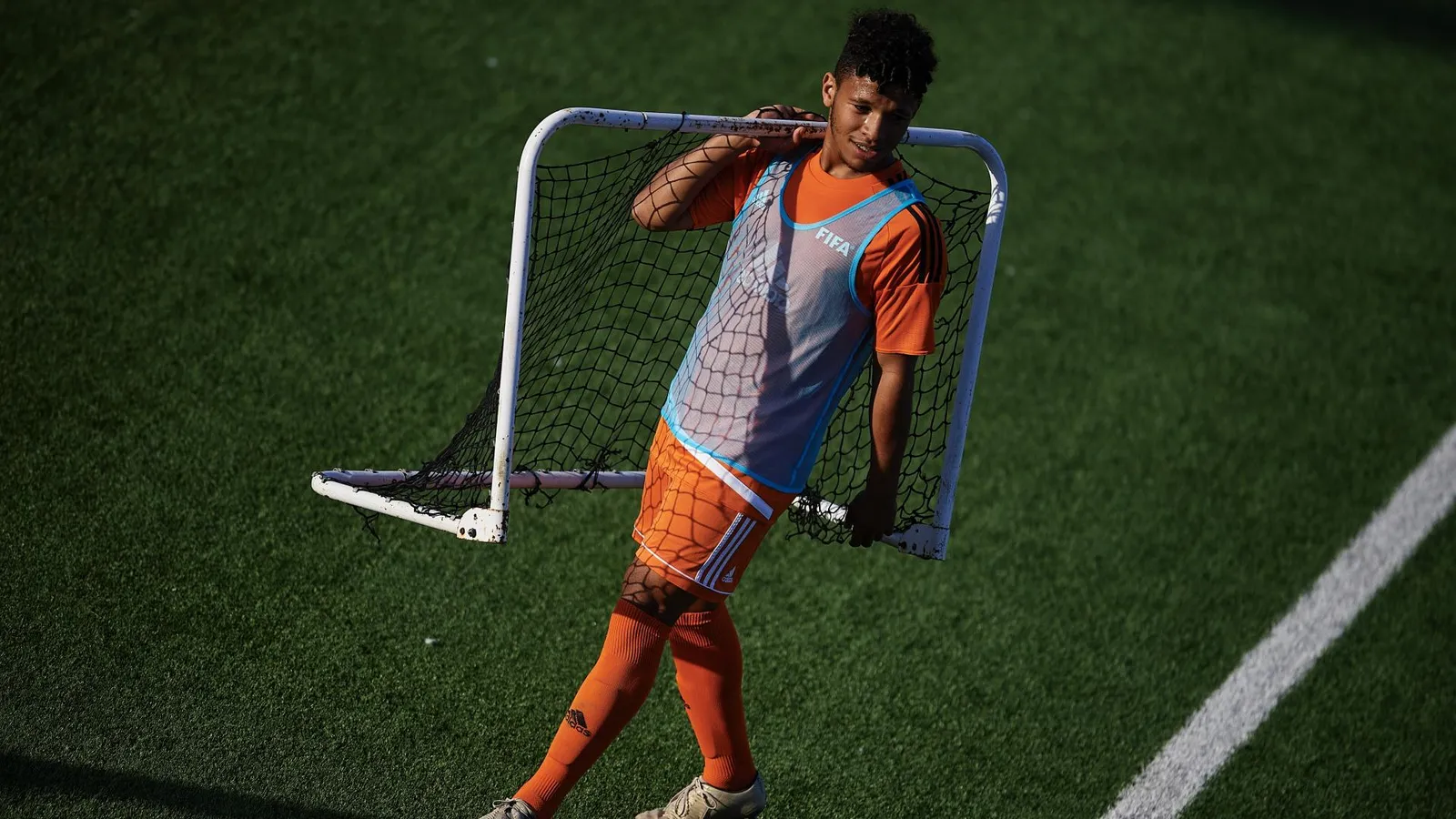
Small goals reward accurate passing and shooting. Two goals to attack teach a child to look up and switch play. Dribble-over-the-line goals reward running with the ball. Changing the goals is often the fastest way to change the behaviour you see.
5. Scoring rules
"A goal after five passes counts double." "A goal from a dribble past a defender counts three." Rules like these let a coach encourage one behaviour without stopping the game to explain it.
6. Length of each game
Short games of two to four minutes keep intensity high and give a natural pause to reset. Children also get a fresh start after a bad game, which matters more than adults think.
What this looks like by age
Minis (4–7). One ball each for warm-ups, then 1v1 and 2v2 games with small goals. Big space, few rules. The aim is touches and fun, and a child who dribbles the wrong way with a smile is still learning.
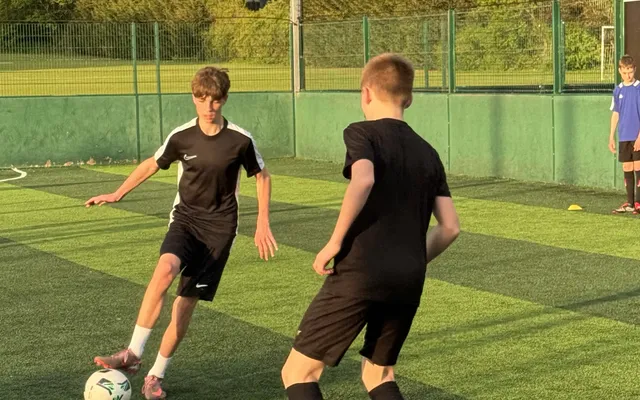
Juniors (8–12). 3v3 to 5v5 with one rule changed at a time: limited touches, target players, overloads such as 4v3. This is where children start to see space and choose a pass. Our post on football training for 8–12 year olds has six games built this way.
Teens (13–17). Games are built around match problems: pressing after losing the ball, playing out from the back, finishing under pressure. The variables are the same; the questions get harder.
How parents can use this at home
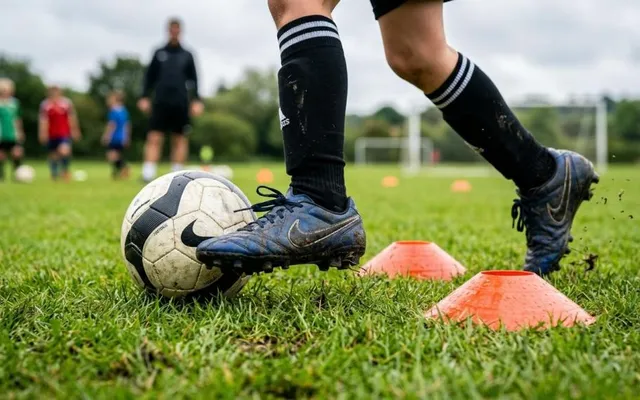
You do not need cones or a coaching badge. A 1v1 in the garden with two jumpers as goals is a small-sided game. Change one thing each week, such as a smaller goal or a rule that they have to beat you before shooting, and you are doing what Coutinho describes. Our list of football games for kids has seven ideas.
Key takeaways
- Small-sided games train technique, fitness and decisions together.
- Coaches shape learning by changing players, space, goals, scoring rules and game length, not by talking more.
- Fewer players means more touches, which is why youth formats in England start at 3v3.
- Change one variable at a time and watch what changes in the game.
Source: Diogo Coutinho, Small-sided games, part 1, FIFA Training Centre, Science Explained. This article is our coaches' summary and commentary, not a transcript.
Further reading: football training for kids.
Want to put this into practice? We run weekly sessions for ages 4–17 at Goals Tolworth. Book a free trial.